

Most dog owners notice the grime before they think about the risk. A rubber chew toy that smells off, a plush squeaker caked with dried saliva, a treat dispenser with food residue packed into every crevice. Following a consistent dog toy care workflow is the fastest way to fix that. This guide walks you through exactly what to do, when to do it, and how to handle every toy type in your dog’s collection, so toys last longer, stay safe, and stop being a source of bacteria in your home.
Table of Contents
- Key takeaways
- Setting up your dog toy care workflow
- Step-by-step cleaning by toy type
- Rotating, inspecting, and retiring toys
- Common mistakes that break the routine
- My take on toy care after years of watching it go wrong
- Toys built to survive the care routine
- FAQ
Key takeaways
| Point | Details |
|---|---|
| Sort before you clean | Assess material type and damage level first to choose the right cleaning method for each toy. |
| Match cleaner to toy type | Use mild, fragrance-free soap for most toys and skip harsh disinfectants unless a vet recommends them. |
| Dry completely every time | Air dry all toys fully before returning them to your dog to prevent mold and bacterial growth. |
| Inspect toys every week | Check for fraying, cracks, and loose parts weekly and retire damaged toys immediately. |
| Rotate the toy collection | Cycling toys in and out keeps your dog engaged and gives you a natural opportunity to clean and inspect. |
Setting up your dog toy care workflow
Before you clean a single toy, get your supplies organized. The right setup cuts your cleaning time in half and means you are not hunting for a scrub brush while your dog is staring at a pile of dirty chew toys.
What you need:
- Mild, fragrance-free dish soap or a pet-safe detergent
- Soft-bristled brush and a bottle brush for treat-dispensing toys
- Clean basin or utility sink
- Drying rack or clean towels
- Mesh laundry bag for plush toys going into the washing machine
- Zipper bags or a storage bin for clean toys
Cleaning supplies comparison:
| Cleaner type | Safe for dogs? | Best use case |
|---|---|---|
| Fragrance-free dish soap | Yes | Rubber, nylon, silicone toys |
| Pet-safe laundry detergent | Yes | Plush and fabric toys |
| White vinegar solution | Generally yes | Mild deodorizing and disinfecting |
| Bleach or ammonia-based cleaners | No | Avoid entirely |
| Scented soaps or surface sprays | No | Too much residue risk |
For the space itself, pick an area with good ventilation and enough room to spread toys out to dry. A laundry room, utility sink area, or outdoor space on a dry day all work well. Avoid cleaning toys in spaces where food is prepared, since cross-contamination is a real concern.
Pro Tip: Keep your cleaning supplies in one labeled bin near wherever you store your dog’s toys. When everything is in one place, you are far more likely to stick to a regular dog toy care routine.
Step-by-step cleaning by toy type
This is the core of any effective dog toy care workflow. Different materials require different approaches. Using the wrong method can damage toys faster than regular play would.
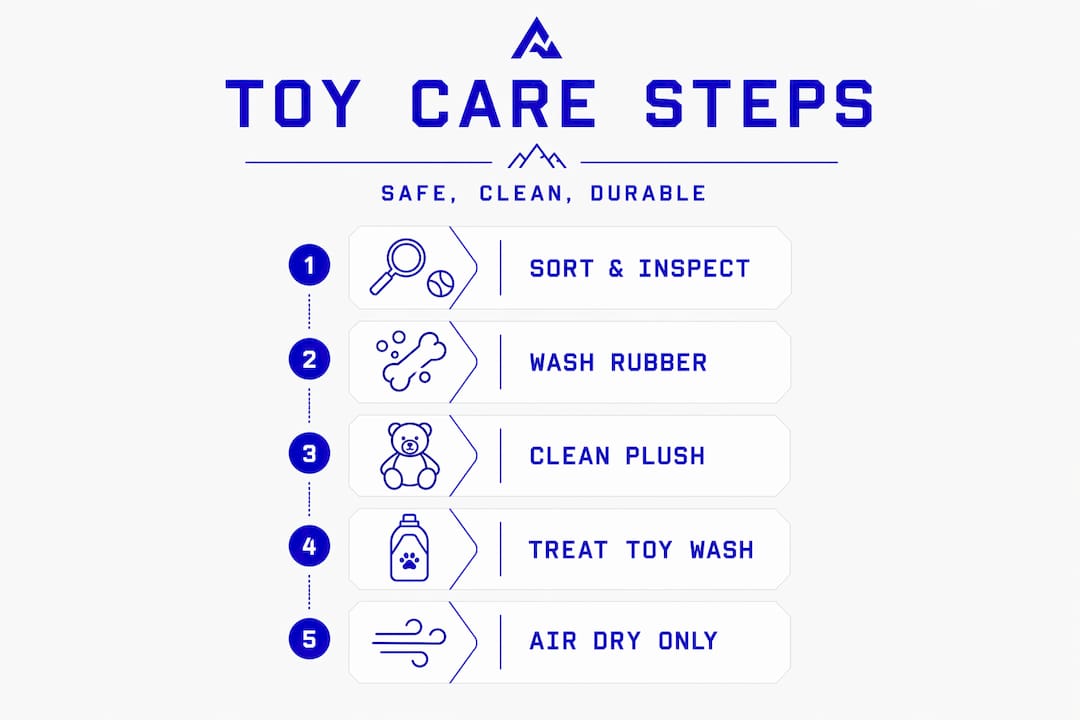
Step 1: Sort and inspect before washing
Pull every toy out and sort them into three groups: rubber and silicone, plush and fabric, and hard or treat-dispensing. Before any water touches them, do a quick inspection. Look for cracks, frayed edges, exposed squeakers, or parts that wiggle loose. Any toy with broken pieces or structural damage gets set aside for retirement, not cleaning.
Step 2: Clean rubber and silicone toys
These are the most forgiving to wash.
- Rinse the toy under warm running water to remove loose debris.
- Apply a small amount of fragrance-free dish soap and scrub thoroughly with a soft brush.
- For molded toys with grooves or holes, use a bottle brush to reach every interior surface.
- Rinse again under warm water until no soap residue remains.
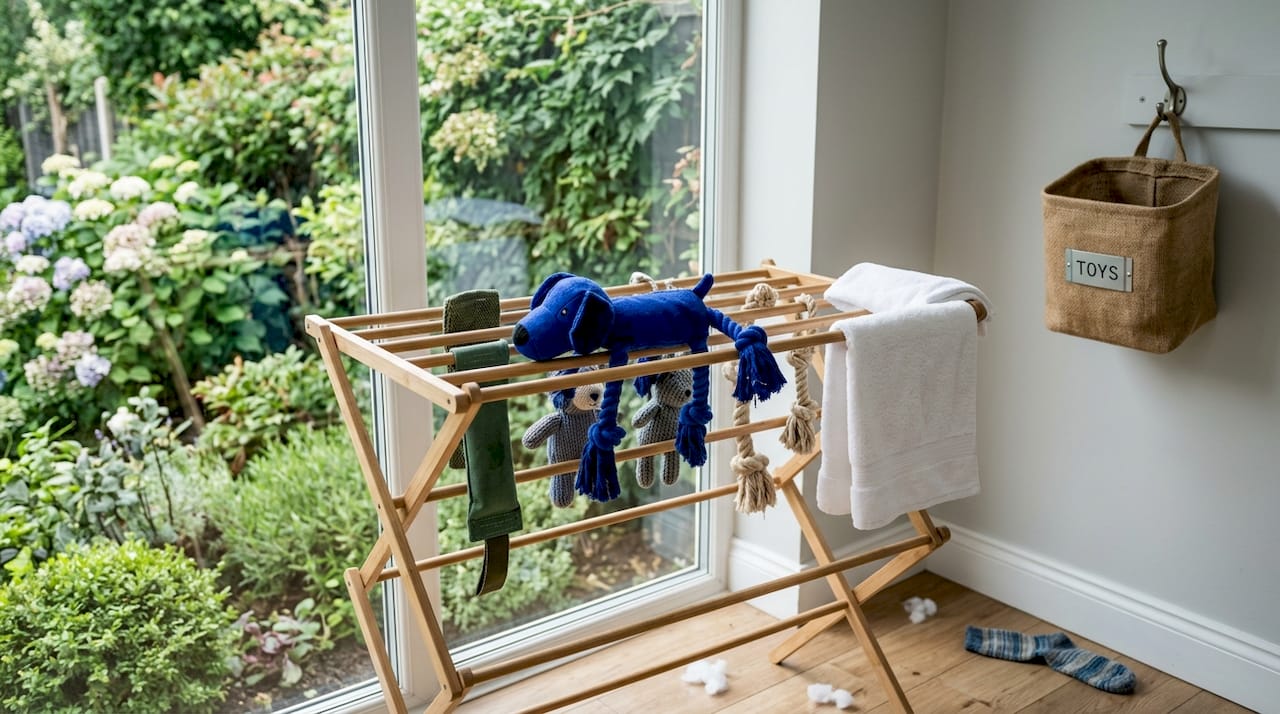
- Place on a drying rack in a well-ventilated area and let air dry fully before returning to your dog.
Strong disinfectants should be avoided unless thoroughly rinsed and cleared by your vet, since residue left in porous materials can irritate your dog’s mouth and digestive system.
Step 3: Clean plush and fabric toys
- Check the care label. Most plush toys can go in the washing machine on a gentle cycle.
- Place them inside a mesh laundry bag to protect seams and squeakers.
- Use a pet-safe, unscented laundry detergent.
- Run a second rinse cycle to remove any detergent traces.
- Never put plush toys in a dryer on high heat. Air drying plush toys for 24 to 48 hours protects internal squeakers and prevents mold from forming in the stuffing.
This last point gets skipped constantly. A toy that looks dry on the outside can still hold moisture deep inside the stuffing. Give it a full day before handing it back.
Step 4: Clean treat-dispensing toys
These toys contact food every single session, so the cleaning standard is higher.
- Disassemble as much as possible.
- Soak in warm, soapy water for 10 to 15 minutes to loosen dried food residue.
- Use a bottle brush to scrub interior chambers and threading.
- Rinse thoroughly under running water.
- Air dry completely with pieces separated so air reaches every surface.
Applying food-safe lubricant like coconut oil to threaded joints on treat-dispensing toys prevents jamming caused by saliva and treat buildup over time. That is a small step most owners skip until the toy stops working.
Cleaning frequency by toy type:
Treat-dispensing toys and lick mats used at mealtimes should be cleaned daily or every other day to stop bacterial buildup from food residue. Rubber chew toys used for general play can typically be cleaned weekly. Plush toys that stay dry during play can be washed every one to two weeks.
Pro Tip: Set a recurring reminder on your phone for toy cleaning day. Pairing it with another weekly task, like laundry or vacuuming, makes it easy to stick to your dog toy care routine without it feeling like a separate chore.
Rotating, inspecting, and retiring toys
A clean toy that is falling apart is still a hazard. The second half of a solid dog toy care workflow is knowing when to pull toys from rotation, not just when to wash them.
Why rotation matters
Toy rotation boosts engagement and makes familiar toys feel new again. But it also serves a practical hygiene purpose. When toys are always available, they accumulate bacteria faster. Rotating toys gives you a natural cleaning window between uses.
A simple approach: keep three to five toys available at any time and swap the rest into a clean storage bin. Every time a toy comes out of rotation, clean it before it goes back in.
Weekly inspection checklist
Run through this check every seven days:
- Fraying fabric or exposed seams on plush toys
- Cracks or splits in rubber or nylon
- Squeakers that have migrated near a torn seam and could be swallowed
- Discoloration that does not come off with cleaning
- Unusual odor that persists after washing
- Pieces that break off with normal hand pressure
Weekly inspection of toys for damage is one of the most effective ways to prevent choking and ingestion hazards. Any frayed, broken, or exposed part is a reason to retire the toy immediately.
When to retire a toy
Retirement is not about the toy’s age. It is about its current condition. A six-month-old rubber toy with no damage beats a three-week-old plush that is shedding stuffing. If a toy fails any item on the inspection list, it goes out. No second chances on safety.
Pro Tip: When choosing new toys, look for products that meet ASTM safety standards for non-toxic materials. Toys built to those standards are safer to begin with and hold up better through repeated cleaning cycles.
Storage between uses
Store clean toys in a fabric bin or breathable container, not a sealed plastic tub. Sealed containers trap moisture and create the exact conditions mold needs to grow. If a toy is even slightly damp when stored, it will smell like it by morning.
Common mistakes that break the routine
Even owners with good intentions make a few consistent errors. Knowing what they are makes them easy to avoid.
The most common dog toy care mistakes:
- Skipping the drying step because the toy “looks dry” after a few minutes
- Using scented soaps or household cleaners that leave residue
- Washing all toy types the same way regardless of material
- Storing toys in a closed bin while still damp
- Waiting until a toy visibly smells or looks dirty before cleaning it
- Ignoring small tears or cracks because the toy “still works fine”
For persistent odors that survive a normal wash, soak rubber toys in a diluted white vinegar solution for 30 minutes before scrubbing. Rinse thoroughly. That handles most odor issues without using anything harsh. If a plush toy still smells after two proper wash cycles, it is time to retire it. The odor source is likely deep in the stuffing where cleaning cannot reach.
Damaged squeakers deserve special attention. A squeaker near a torn seam can be pulled out and swallowed in seconds. If you hear the squeak getting louder or the toy feels crunchy in a new spot, open the seam and remove the squeaker or retire the toy entirely.
Pro Tip: If your dog consistently destroys toys faster than you can maintain them, check out why dogs chew destructively before buying replacements. The issue is often boredom or anxiety, not just the toy’s durability.
My take on toy care after years of watching it go wrong
I have looked at a lot of dog toy collections, and the single most common problem is not that owners do not care. It is that the inspection step gets treated as optional. Owners deep clean toys twice a year and consider the job done. But a toy can develop a crack, a loose seam, or a foreign smell in a week. Occasional deep cleaning without regular inspection misses the hazards that actually matter.
The other thing I have seen get overlooked is drying. Not partial drying. Complete drying. Plush toys especially. I have seen toys that smelled fine to the owner that were growing mold inside the stuffing because they were stored before they dried fully. That is a health issue, not a cleanliness preference.
The owners who maintain their toys best are the ones who connect toy care to existing habits. Toy wash day is laundry day. Inspection happens during the weekly tidy. It takes three minutes once it is built in. The workflow matters less than the consistency.
My recommendation is always to buy fewer, better toys and maintain them properly rather than cycling through a large collection with no structure. Toys that meet material safety standards and hold up to cleaning are easier to care for and last long enough that the routine pays off.
— Thomas
Toys built to survive the care routine
A care workflow works best when your toys are built for it. Ascenciongear carries dog toys designed with cleaning and durability in mind, so the routine you build actually holds up over time. The Squeaky Crinkle Dog Toy is a no-stuffing plush option, which eliminates the mold-in-the-stuffing problem entirely and makes air drying faster and more reliable. For owners who use treat-dispensing and puzzle toys, the Interactive Octopus 4-Pack is designed for regular cleaning and mental enrichment without complex assembly that traps residue. If you want to extend the hygiene routine beyond toys, the machine-washable crate pad from Ascenciongear fits right into a consistent wash-day habit.
FAQ
How often should dog toys be cleaned?
Treat-dispensing toys and lick mats should be cleaned daily or every other day. Rubber chew toys can be cleaned weekly, and plush toys every one to two weeks depending on use.
What soap is safe for cleaning dog toys?
Use a mild, fragrance-free dish soap or pet-safe detergent and rinse thoroughly. Harsh disinfectants or scented cleaners can leave residue that irritates a dog’s mouth or digestive system.
Can plush dog toys go in the dryer?
No. High heat can damage squeakers and internal parts. Air dry plush toys for 24 to 48 hours instead to prevent mold and protect toy integrity.
When should a dog toy be thrown away?
Retire any toy showing cracks, frayed seams, exposed squeakers, or pieces that break off under normal pressure. Immediate removal of damaged toys prevents choking and ingestion hazards.
What is the best way to remove odors from dog toys?
Soak rubber toys in a diluted white vinegar solution for 30 minutes, then scrub and rinse completely. For plush toys that still smell after two proper wash cycles, retirement is the safer choice.