

Most dog owners assume that more toys automatically means more fun. Fill the basket, leave it on the floor, and let the dog pick whatever he wants. Simple enough. But research shows that unlimited toy access can actually work against you, reducing your dog’s motivation to play and even fueling obsessive behaviors. Selective toy rotation, by contrast, keeps each toy feeling new, supports mental stimulation, and gives you a practical tool for shaping healthier play habits over time.
Table of Contents
- Why toy rotation matters for dogs
- How to build an effective toy rotation plan
- Comparing toy rotation with unlimited toy access
- Signs your dog needs smarter toy rotation
- The overlooked impact of toy fixation and owner habits
- Enhance your toy rotation with smart picks
- Frequently asked questions
Key Takeaways
| Point | Details |
|---|---|
| Rotation boosts engagement | Dogs play longer and more intently when toys are rotated regularly. |
| Prevents toy fixation | Smart rotation strategies help stop compulsive behaviors and keep play healthy. |
| Tailor to your pet | Observe and customize rotation for your dog’s unique personality and motivation. |
| Mix toy types | Including different toy categories maximizes mental stimulation. |
| Linked to better behavior | Rotating toys can shrink destructive chewing and promote positive habits. |
Why toy rotation matters for dogs
Dogs are novelty seekers. When something new appears in their environment, they investigate it, interact with it, and engage with it at a higher level than something familiar. Toys are no different. A chew toy that sat in the basket for three weeks becomes part of the furniture. Bring it back after a short absence, and it suddenly gets your dog’s full attention again.
This is the core logic behind toy rotation. It is not about giving your dog less. It is about making each play session more meaningful by controlling what is available and when.
The behavioral benefits go beyond simple engagement. Toy rotation reduces the risk of your dog developing a single-item fixation. Some dogs, especially high-drive breeds, can become intensely attached to one specific toy, carrying it everywhere, guarding it, or showing signs of anxiety when it is taken away. Compulsive fixation on toys may require tailored rotation strategies rather than simply increasing toy access. That is a meaningful distinction. Adding more toys to the pile does not solve fixation. Thoughtful rotation does.
Rotation also supports mental health in a direct way. Dogs that have consistent mental stimulation through varied play show fewer signs of boredom-related behaviors. Understanding chewing causes and solutions helps clarify why rotation matters so much for destructive chewers specifically.
Key benefits of toy rotation include:
- Sustained interest across longer periods
- Reduced obsessive attachment to single objects
- Lower rates of destructive chewing from boredom
- Better responsiveness during training sessions
- More varied physical and mental engagement
Pro Tip: Watch your dog during the first five minutes with a toy. High engagement followed by a sudden drop in interest is a clear sign that toy is ready to be rotated out for a week.
If you use toys as part of training, toy training results improve when the toy in question remains exciting and novel rather than overly familiar.
How to build an effective toy rotation plan
Understanding the benefits is one thing. Building a system you will actually stick to is another. The good news is that an effective rotation plan does not require a spreadsheet or a strict schedule. It requires observation, a bit of organization, and a basic framework to follow.
Here is a practical step-by-step process:
- Take inventory. Gather all your dog’s toys and group them by type: chew toys, puzzle toys, interactive toys, and plush or soft toys. Aim for at least three to four toys in each category.
- Divide into groups. Create two or three groups with a mix of types in each. Variety within each group keeps each rotation fresh.
- Set a rotation schedule. Most dogs benefit from a rotation every three to seven days. High-energy dogs may need more frequent changes. Calmer dogs may do fine with a weekly swap.
- Store inactive toys out of sight. Toys left in plain view still lose novelty value even when your dog is not playing with them. Store them in a closed box or a closet.
- Reintroduce with enthusiasm. When bringing toys back into rotation, present them as if they are new. Your energy influences your dog’s response.
- Adjust based on reaction. If your dog shows no interest in a toy even after rotation, it may be time to retire that toy or replace it.
Tailoring toy access is crucial for dogs with high toy motivation. That means a one-size rotation schedule does not work for every dog. A border collie may need a new toy or a rotation swap every two days. A basset hound might be happy with a weekly swap.
Sample 3-week rotation schedule:
| Week | Group in rotation | Toy types included |
|---|---|---|
| Week 1 | Group A | Chew toy, puzzle toy, squeaky plush |
| Week 2 | Group B | Interactive tug toy, crinkle toy, rubber chew |
| Week 3 | Group C | Fetch toy, treat-dispensing toy, soft plush |
Before you start introducing new toys into your rotation, read about introducing new toys safely and effectively. And when selecting what goes into each group, consult a guide on choosing safe toys to make sure every option is appropriate for your dog’s size and chewing style.
Pro Tip: Keep a simple log, even just notes on your phone, tracking which toys get the most play during each rotation cycle. Over time, you will see patterns that help you build better groups and retire toys your dog has genuinely lost interest in.
Comparing toy rotation with unlimited toy access
The alternative to rotation is what most households default to: all toys available all the time. It feels generous. It feels like the dog has freedom of choice. But the outcomes tell a different story.
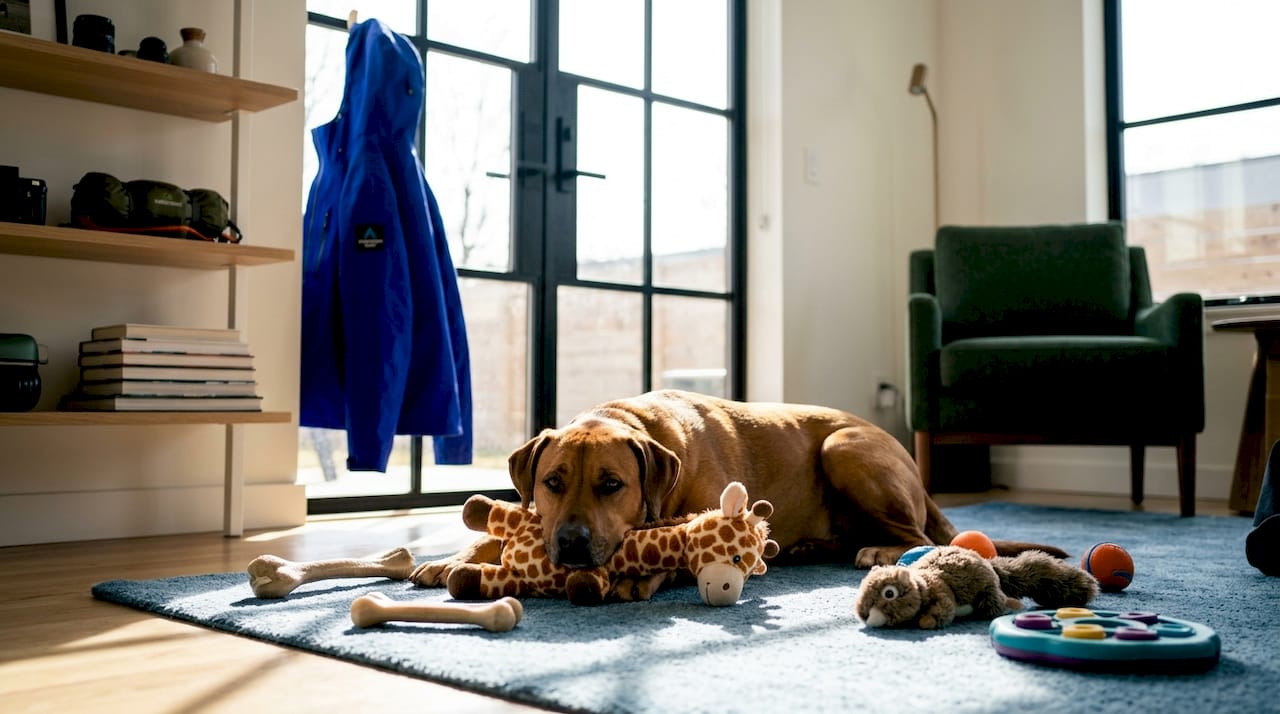
Overexposure to toys can dilute their value and make play less engaging. When everything is always available, nothing stands out. Your dog may walk past a full basket and still seem bored, which leads many owners to buy more toys, further compounding the problem.
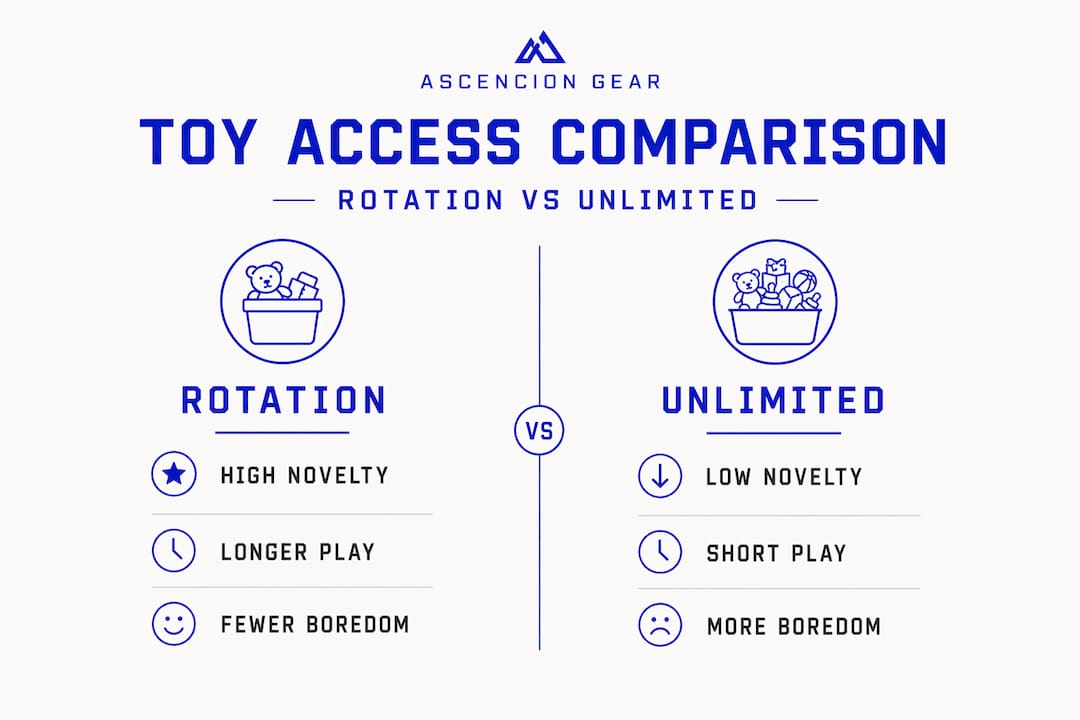
Toy rotation vs. unlimited toy access:
| Factor | Toy rotation | Unlimited access |
|---|---|---|
| Novelty level | High, refreshed regularly | Low, diminishes over time |
| Mental stimulation | Consistent and targeted | Inconsistent, often low |
| Risk of fixation | Reduced | Higher |
| Destructive behavior | Less likely | More likely |
| Owner control over play | Strong | Minimal |
| Play session length | Longer, more engaged | Shorter, distracted |
The behavioral outcomes reinforce this comparison clearly:
With rotation:
- Dogs engage longer with individual toys
- Play sessions show higher energy and focus
- Transition back to calm after play is smoother
- Toy-based training becomes more effective
With unlimited access:
- Dogs shift between toys quickly without deep engagement
- Boredom-related behaviors appear despite having many toys
- Some toys get ignored entirely for extended periods
- Certain toys may become obsession objects
For owners investing in durable toys, rotation also protects that investment. A toy used in short rotational bursts lasts longer than one chewed on continuously for weeks. If you want to update your overall toy setup in 2026, reviewing top accessories for 2026 gives you a current overview of what works best for different dogs.
The data is consistent. Rotation produces more engaged, calmer, and better-stimulated dogs compared to the dump-all-the-toys approach that most households use by default.
Signs your dog needs smarter toy rotation
Sometimes the rotation schedule you set up stops working. Dogs change. Their preferences shift. A toy that held their attention for months may suddenly become invisible. Knowing what to look for helps you adjust before boredom or frustration sets in.
Toy-motivated dogs may require a more tailored approach for toy access, especially when their behavior starts to signal that the current strategy is not meeting their needs.
Watch for these warning signs:
- No interest at toy time. Your dog sniffs a toy and walks away. This can mean the toy has lost all novelty and needs to leave the rotation for a while.
- Obsessive focus on one item. Carrying a toy constantly, guarding it, or showing stress when it is taken are all signs of fixation, not healthy attachment.
- Increased destructive chewing elsewhere. Chewing furniture, shoes, or household items often means your dog is under-stimulated. Reviewing dog chewing behaviors can help you decide whether rotation alone solves it or whether you need a different toy type.
- Short, disengaged play. If your dog picks up a toy, mouths it briefly, and drops it within 30 seconds repeatedly, that toy is stale.
- Restlessness during normally calm periods. Pacing, whining, or nudging you for attention during downtime often points to insufficient mental stimulation during play hours.
- Loss of interest in training with toys. If toy rewards stop motivating your dog during training, the toy has lost its value. Rotation resets that value.
The faster you catch these signs, the easier it is to adjust. You do not need to rebuild your entire rotation plan. Sometimes swapping one toy out of the current group and replacing it with something from storage is enough to reset your dog’s engagement level.
Pro Tip: If your dog’s interest drops suddenly rather than gradually, do not wait for the scheduled rotation day. Swap the toy out early. Early swaps prevent the loss of novelty from becoming permanent disinterest.
The overlooked impact of toy fixation and owner habits
Most articles on toy rotation focus entirely on the toys. But the owner’s behavior is just as important, and often more so.
Here is what we have seen and what the research supports: a dog’s relationship with toys is shaped as much by how the owner responds as by what toys are offered. If you consistently hand your dog the same toy when he whines, you are reinforcing both the request and the attachment to that specific toy. Over time, that creates a fixation that rotation alone cannot fix.
Toy access strategy, including rotation, may need closer tailoring for highly toy-motivated dogs. That tailoring is not just about schedule or toy types. It includes how you present toys, when you make them available, and how you respond when your dog shows preference or anxiety.
Consider a real example: a compulsive chewer who fixates on a single rubber toy. The owner rotates toys every week but always brings that rubber toy back after three days because the dog seems anxious without it. The rotation never fully works because the owner’s response to the dog’s anxiety reinforces the cycle. The fix is not a different toy. It is a different owner behavior: extending the time away from the fixation toy gradually, paired with a consistent alternative.
Not every dog needs the same rotation frequency. A working breed with high drive needs daily or near-daily stimulation shifts. A senior dog may do well with a two-week rotation and one or two familiar favorites kept in regular play. Applying a generic schedule without accounting for your individual dog is one of the most common mistakes in toy management.
Using training with treat toys is one of the most effective ways to rebuild positive associations with new toys during a rotation transition, especially for dogs that resist change.
The broader point is this: toy rotation is a tool, not a formula. Your habits, your timing, and your responsiveness to your dog’s cues matter more than the precise number of days between swaps.
Enhance your toy rotation with smart picks
If you are ready to build or expand your rotation inventory, having the right mix of toy types makes a real difference. A solid rotation includes variety across texture, sound, and function, so each group offers something genuinely different for your dog.
At Ascencion Gear, we carry toys built specifically for rotation-ready play. The squeaky crinkle dog toy adds crinkle and squeak stimulation in one lightweight toy that works well for small to large breeds. For puzzle-style engagement, the interactive octopus dog toy set gives your dog hide-and-seek play that challenges both instinct and focus. If you want to stock multiple rotation groups at once, our premium pet bundles are designed with variety in mind, giving you a cost-effective way to build out a full rotation plan across all toy categories.
Frequently asked questions
How often should I rotate dog toys?
Rotate toys every three to seven days based on your dog’s interest level, since toy access needs tailoring for highly motivated dogs who may need more frequent changes.
What types of toys work best for rotation?
Mix chew toys, puzzle toys, plush toys, and interactive toys across your rotation groups, because toy access including rotation works best when it addresses a range of stimulation types rather than repeating the same format.
Can rotation help with destructive chewing?
Yes, rotation can prevent negative behaviors such as destructive chewing by keeping play engaging and reducing the boredom that drives dogs to chew furniture or household items.
How should I clean toys before rotating?
Wash toys with pet-safe soap and warm water before returning them to rotation, and inspect each toy for cracks, loose parts, or worn fabric that could pose a safety risk before giving them back to your dog.