

You hand your dog a new toy, step away for five minutes, and come back to a pile of fluff and a chewed-up squeaker on the floor. Sound familiar? Choosing the right dog toy is not just about finding something your dog enjoys. It is about matching the toy to your dog’s size, chewing strength, and play style to prevent choking, dental damage, or ingestion of unsafe materials. This guide walks you through exactly what to look for, which materials hold up, and how to build a smart collection that keeps your dog safe and engaged.
Table of Contents
- Understand your dog’s play style and needs
- What makes a dog toy safe and durable?
- Picking the right size, shape, and toy features
- How to build a smart dog toy bundle
- A vet’s-eye view: Why “one toy fits all” never works
- Find safe, durable, and fun toys with Ascencion Gear
- Frequently asked questions
Key Takeaways
| Point | Details |
|---|---|
| Know your dog’s style | Match toys to your dog’s breed, age, and chewing strength to maximize safety and engagement. |
| Pick the right materials | Choose natural rubber or reinforced nylon and avoid hard plastics, tennis balls, and unknown imports. |
| Prioritize safety over price | Invest in reputable, safety-tested brands instead of generic or low-cost alternatives. |
| Bundle wisely | Create stimulating combinations with chew, tug, and puzzle toys—but always supervise play. |
| No toy is indestructible | Regularly inspect and rotate toys, removing any with signs of wear or damage. |
Understand your dog’s play style and needs
Every dog chews differently. A six-month-old Golden Retriever puppy does not need the same toy as a three-year-old American Staffordshire Terrier. Understanding where your dog falls on the play and chew spectrum is the first step to buying toys that last and stay safe.
Dogs generally fall into three categories: gentle chewers, moderate chewers, and power chewers. Gentle chewers prefer soft plush toys and light rope toys. Moderate chewers do well with rubber toys and medium-density nylon. Power chewers need heavily reinforced materials that resist being torn apart in minutes. Buying a plush toy for a power chewer is not just wasteful. It is a choking risk.
Breed and age matter just as much. Puppies have smaller jaws and developing teeth, so overly hard toys can cause tooth fractures. Senior dogs may have weaker teeth and benefit from softer rubber options. According to American Humane, organizations like the ASPCA and AAHA emphasize that no toy is 100% safe and that proper size-matching, flexibility, and ongoing supervision are all essential for safe play.
There are also breed-specific factors to consider. Brachycephalic breeds, meaning dogs with flat faces like Bulldogs and Pugs, need breed-specific toy needs addressed carefully. They need larger balls that they cannot accidentally lodge in their airways. Rope toys are popular, but veterinarians flag them as a fraying risk. Loose fibers can be swallowed and cause intestinal blockages. And toys with holes or openings that could trap a jaw should always be avoided, as noted by veterinary guidance on chew toys.
A simple framework for assessing your dog
- Identify your dog’s chew strength: gentle, moderate, or power chewer.
- Note your dog’s breed category: brachycephalic, large breed, small breed, or mixed.
- Consider life stage: puppy (under 1 year), adult (1 to 7 years), or senior (7 years and older).
- Observe play preferences: does your dog prefer to toss, tug, chase, or gnaw?
- Assess attention span: some dogs need puzzle-style toys to stay focused and avoid destructive behavior.
| Dog type | Recommended toy style | Material to prioritize |
|---|---|---|
| Gentle chewer | Plush, light rope | Soft fabric, natural cotton |
| Moderate chewer | Rubber, braided rope | Natural rubber, thick nylon |
| Power chewer | Reinforced chew, dense rubber | Industrial nylon, thick natural rubber |
| Puppy | Soft rubber, plush | Flexible rubber, non-toxic fabric |
| Senior | Soft rubber, gentle plush | Flexible rubber, low-impact foam |
Pro Tip: Rotate your dog’s toys every five to seven days. This keeps things fresh, reduces boredom, and gives you a chance to inspect each toy for damage before putting it back in play.
What makes a dog toy safe and durable?
Once you understand your dog’s style, you can zero in on which toys will truly last and are safest.
Material is the single biggest factor in toy safety. Natural rubber is widely considered the gold standard. It is flexible enough to prevent tooth fractures, durable enough to withstand heavy gnawing, and typically free of harmful chemicals. Reinforced nylon is another strong option for power chewers, though you should monitor it closely for sharp edges as it wears down.

What about soft toys? Plush toys are fine for gentle chewers and supervised play, but they are not built for dogs that shred. The stuffing and inner squeaker components become choking hazards the moment the outer layer is broken.
According to Empire Ranch Vet, hard plastics and materials containing BPA or phthalates should be avoided entirely. These chemicals can leach into a dog’s system during heavy chewing sessions. Tennis balls are another commonly misunderstood toy. Their abrasive felt surface can wear down tooth enamel over time, and the ball itself can compress and cause a choking risk for large breed dogs.
“Not all toys marketed as ‘indestructible’ have been independently tested. A toy’s durability is only meaningful when matched to the specific size and chewing strength of your dog.”
Brand reputation matters more than people realize. According to Forbes, reputable brands with documented safety testing protocols consistently outperform cheap imports that carry no certifications. Brands that invest in safety testing typically use non-toxic dyes, reinforce stitching on plush toys, and size their products accurately across their lines.
Key material comparison
| Material | Best for | Durability | Safety notes |
|---|---|---|---|
| Natural rubber | All chew types | High | Flexible, non-toxic, vet-recommended |
| Reinforced nylon | Power chewers | Very high | Monitor for sharp edges over time |
| Plush fabric | Gentle chewers, supervised | Low to medium | Remove when damaged |
| Braided rope | Moderate chewers | Medium | Monitor for fraying; remove loose fibers |
| Hard plastic | Not recommended | Varies | Risk of tooth fracture and chemical exposure |
When shopping for durable dog toy materials, prioritize the following:
- Toys labeled BPA-free and phthalate-free
- Reinforced seams on plush and rope designs
- Size-appropriate dimensions for your dog’s breed
- Flexibility that bends rather than shatters under pressure
- Non-toxic dyes confirmed on the product label
Pro Tip: Squeeze any rubber toy before buying. If it does not flex at all under moderate hand pressure, it is likely too hard for safe chewing and could crack your dog’s teeth.
Picking the right size, shape, and toy features
After learning which materials are best, refine your toy choices for your dog’s safety based on their size and habits.
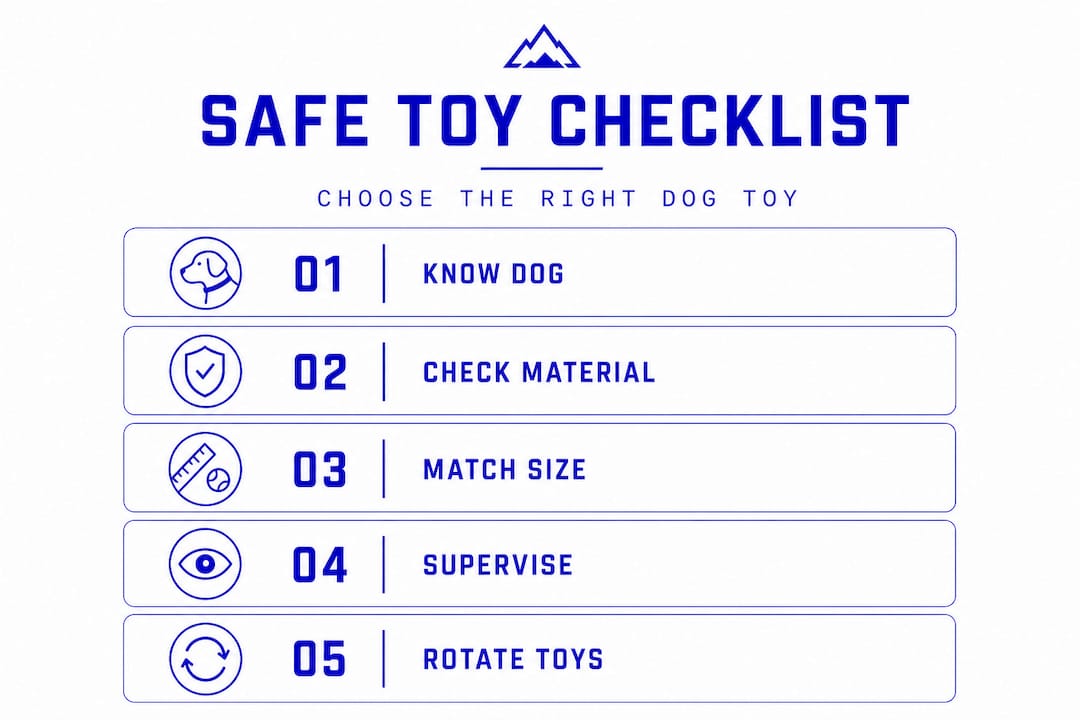
Size is not just about convenience. It is a safety issue. A toy that fits entirely inside your dog’s mouth is a choking hazard, full stop. The general rule is that a toy should be large enough that your dog cannot get it past their back teeth. This is especially critical for large and giant breeds, where toys marketed as “medium” may still pose a risk.
According to American Humane, the ASPCA recommends matching toy size directly to jaw size, not just breed weight. A Labrador and a Greyhound may weigh the same but have very different jaw widths and chewing mechanics.
Shape also plays a role in safety. Rounded edges reduce the risk of mouth and gum injuries. Irregular shapes with protruding parts can snap off under pressure and become swallowed fragments. Toys with long, thin appendages designed for tugging are generally fine, but only when supervised.
Steps to size and shape check a toy before buying
- Hold the toy next to your dog’s muzzle. It should be wider than the jaw opening.
- Check all edges for sharpness. Run your finger along every surface.
- Inspect any small parts, buttons, or attached accessories that could detach.
- Pull on any rope or attachment points to test tensile strength.
- Confirm the toy bends under moderate pressure rather than snapping.
Additional features like squeakers add engagement, but they come with their own risks. Dogs that are motivated to “find” the squeaker will dig into the toy until they reach it. Once extracted, the small plastic or rubber squeaker becomes a choking hazard. Veterinarians note, as flagged by Aspen Vet Flagstaff, that squeaker toys should always be used with supervision, particularly for dogs that destroy toys quickly.
“A toy that is perfect for one dog can be dangerous for another. There is no universal fit, which is why observing your dog during play is as important as the toy itself.”
Key safety rules to follow during dog toy safety during play:
- Replace toys at the first sign of cracking, fraying, or missing pieces
- Inspect rope toys after every session for loose strands
- Remove squeakers immediately if the toy covering is broken
- Never leave a power chewer alone with a plush toy
- Check that balls cannot be fully compressed into the throat
How to build a smart dog toy bundle
Now that you are able to pinpoint the right toy types, let’s explore how to put together an enriching collection for your dog.
A well-rounded toy bundle is not just about variety for its own sake. Different toy types serve different developmental and behavioral needs. A dog that only has one type of toy gets bored faster and is more likely to redirect that energy toward furniture, shoes, or other household items.
According to Forbes, bundling toy types across categories, including chew toys, tug toys, interactive puzzle toys, and squeaky toys, provides more complete mental and physical stimulation than any single type alone. For puppies especially, treat-stuffable toys serve double duty: they entertain and reinforce training behaviors at the same time.
Building a bundle for an aggressive chewer looks different than building one for a senior dog. The aggressive chewer needs reinforced nylon and thick natural rubber as the foundation, with tug toys made of heavy-duty rope for supervised interaction. A senior dog benefits more from softer rubber and low-stimulation plush options.
Empire Ranch Vet also notes that natural rubber toys designed to be stuffed with treats are particularly effective for puppies because they direct chewing behavior toward an appropriate outlet and reduce anxiety during crate training.
A practical bundle for most dog owners includes:
- One reinforced chew toy matched to chewing strength
- One rope or tug toy for interactive play
- One treat-stuffable toy for mental enrichment and training
- One puzzle toy to slow feeding or challenge problem-solving
- One plush toy for gentle chewers or supervised downtime play
Pro Tip: When building a bundle, buy from one or two reputable brands rather than mixing several unknown manufacturers. This makes it easier to track quality standards and replacement schedules.
Rotating toys weekly is not just a novelty trick. It also serves as a built-in safety check. Each time you rotate a toy back into play, inspect it fully. This habit catches damage early, before a chewed piece becomes a veterinary emergency. Learn more about using treat toys for training to get the most out of your enrichment bundle.
A vet’s-eye view: Why “one toy fits all” never works
Here is something worth saying plainly: most toy-related injuries and ingestion emergencies are preventable. Not because dogs are careless, but because owners underestimate how quickly a toy can go from safe to dangerous once it starts to break down.
The idea that you can buy a single “indestructible” toy and stop worrying is a myth. As American Humane reinforces, no toy is completely safe without supervision and proper size-matching. A toy rated for large breeds can still be too small for a specific dog’s jaw width. A toy labeled durable may last six months for one dog and six minutes for another.
The real issue is that dog owners often treat toy selection as a one-time purchase decision rather than an ongoing practice. They buy a set, put the toys out, and assume the job is done. But dogs change. A puppy who was a gentle chewer at four months may become a powerful chewer by eight months. A toy that was safe last year may have micro-cracks or fraying that makes it a hazard today.
The most effective approach is to treat your dog’s toy collection the same way you would a toolkit. Each tool has a specific function. You inspect your tools regularly. You replace them when they wear out. You do not use the same tool for every job.
Understanding the causes of destructive chewing is also part of this picture. Dogs that chew destructively are often understimulated, anxious, or under-exercised. Addressing those root causes makes any toy collection more effective, because your dog is using toys for enrichment rather than for stress relief.
Invest time in teaching your dog how to play with each toy type. Introduce new toys with brief supervised sessions. Watch how your dog interacts with the toy in the first few minutes. That observation alone tells you more than any product label.
Find safe, durable, and fun toys with Ascencion Gear
Applying the guidelines in this article does not have to mean hours of research for every purchase. At Ascencion Gear, the work is already done for you with curated bundles built around real safety and durability standards.

For dogs that chew hard and fast, the Aggressive Chewer Dog Toy Bundle is designed specifically to handle power chewers with reinforced materials and size-matched options. If you want a broader selection to rotate through, browse the full range of dog toy bundles organized by play style and life stage. For owners who want variety with squeaky engagement, the 8-Piece Squeaky Dog Toy Set gives you a mix of shapes and textures to rotate through the week. Every bundle ships across the US and comes from a brand that takes your dog’s safety seriously.
Frequently asked questions
How often should I replace my dog’s toys?
Replace toys as soon as you spot fraying, cracks, or missing pieces that could become a choking hazard. Veterinary guidance on toy inspection frequency recommends checking rope toys after every play session.
Are tennis balls safe for dogs to chew?
Tennis balls are best avoided for regular chewing because the abrasive felt wears down tooth enamel over time. According to Empire Ranch Vet, tennis ball risks also include compression-related choking, particularly for large breeds, and veterinarians at Aspen Vet echo this warning.
What’s the best type of dog toy for aggressive chewers?
Toys made from reinforced nylon or natural rubber by established brands hold up best for aggressive chewers. Both Empire Ranch Vet and Forbes recommend prioritizing tested brands over cheap alternatives that lack safety certifications.
Is it safe to leave my dog alone with toys?
No toy is completely safe for unsupervised play, particularly for strong chewers. The ASPCA and AAHA guidance is clear that supervision during play is a non-negotiable part of safe toy use, regardless of the toy’s durability rating.