

Your dog’s favorite chew toy touches their mouth dozens of times a day. That means bacteria, saliva, food residue, and outdoor grime build up fast. A proper dog toy cleaning guide does more than keep toys looking nice — it reduces health risks, removes odors your dog actually notices, and keeps toys from breaking down before their time. The methods that work depend on the material. Plush toys need a different approach than rubber, and rope toys need more attention than most owners realize. Here’s what actually works.
Table of Contents
- What you need: tools, cleaners, and safety essentials for dog toy cleaning
- Step-by-step cleaning methods for different dog toy materials
- Common mistakes dog owners make when cleaning toys and how to avoid them
- How often to clean your dog’s toys and how to maintain hygiene between washes
- Rethinking dog toy cleanliness: why gentle care wins over harsh sanitization
- Safe and fun: keep your dog’s toys fresh with Ascencion Gear
- Frequently asked questions
What you need: tools, cleaners, and safety essentials for dog toy cleaning
Before you clean anything, you need the right supplies. The wrong products can leave residue that irritates your dog’s mouth and stomach. Gathering everything first makes the process faster and safer.
Safe, residue-free cleaning starts with product selection. The safest approach for most dog toys involves a mild, fragrance-free, pet-safe detergent or dish soap. Scented products may smell fresh to you, but the compounds that create that fragrance can irritate dogs. Unscented dish soap like plain Dawn works well for hard toys. For plush toys, an unscented, gentle laundry detergent is the right choice.
Core supplies to have ready:
- Mild, fragrance-free dish soap or laundry detergent
- Mesh laundry bags (for washing plush toys in the machine)
- A firm scrub brush or old toothbrush for crevices
- Soft towels and a drying rack or clean surface
- White vinegar (distilled, not flavored)
- Baking soda for odor removal on non-porous surfaces
- A bucket or basin for soaking
- Clean running water for thorough rinsing
One combination worth knowing: baking soda as a safe cleaner is effective for many toy materials, including plastic and hard rubber. It neutralizes odors without leaving any toxic residue. Combined with a white vinegar rinse for non-porous toys, it handles most everyday cleaning jobs without any commercial product at all.
What to avoid entirely:
- Bleach and ammonia-based cleaners
- Fabric softeners (leave a coating that dogs may ingest)
- Essential oil-based products
- Heavily scented multi-surface sprays
- Hydrogen peroxide for routine use (more on this in the mistakes section)
Before you start choosing safe dog toys for your dog, understanding which materials clean easily also helps you buy smarter. Hard rubber and silicone are the easiest to sanitize. Plush with no stuffing is simpler to wash than traditional stuffed toys. Rope toys are the most labor-intensive.
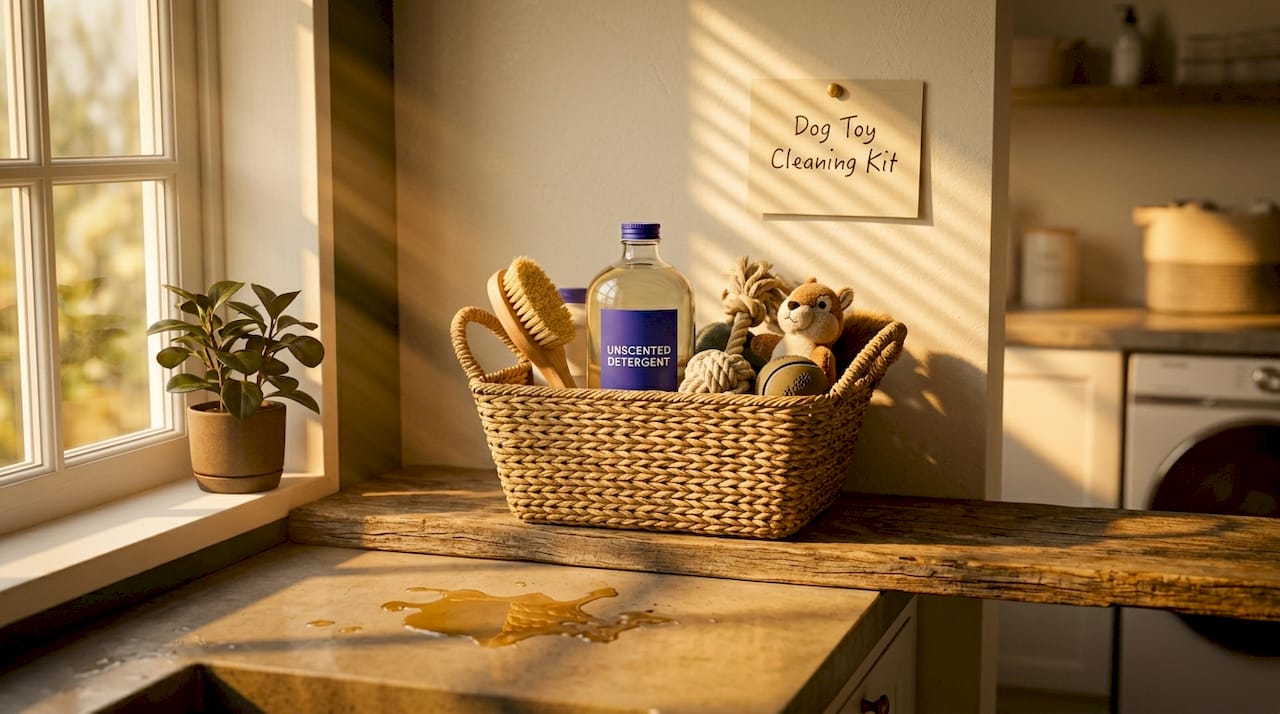
Pro Tip: Keep a small dedicated cleaning kit under the sink or in your laundry room. A mesh bag, a scrub brush, and unscented dish soap is all you need for 90% of toy cleaning situations.
Now that you know what you need, let’s explore how to clean different types of dog toys safely.
Step-by-step cleaning methods for different dog toy materials
Not all toys clean the same way. Using the wrong method can damage the toy, leave residue inside crevices, or create conditions where mold grows during drying. Here is how to handle each material correctly.
Plush toys
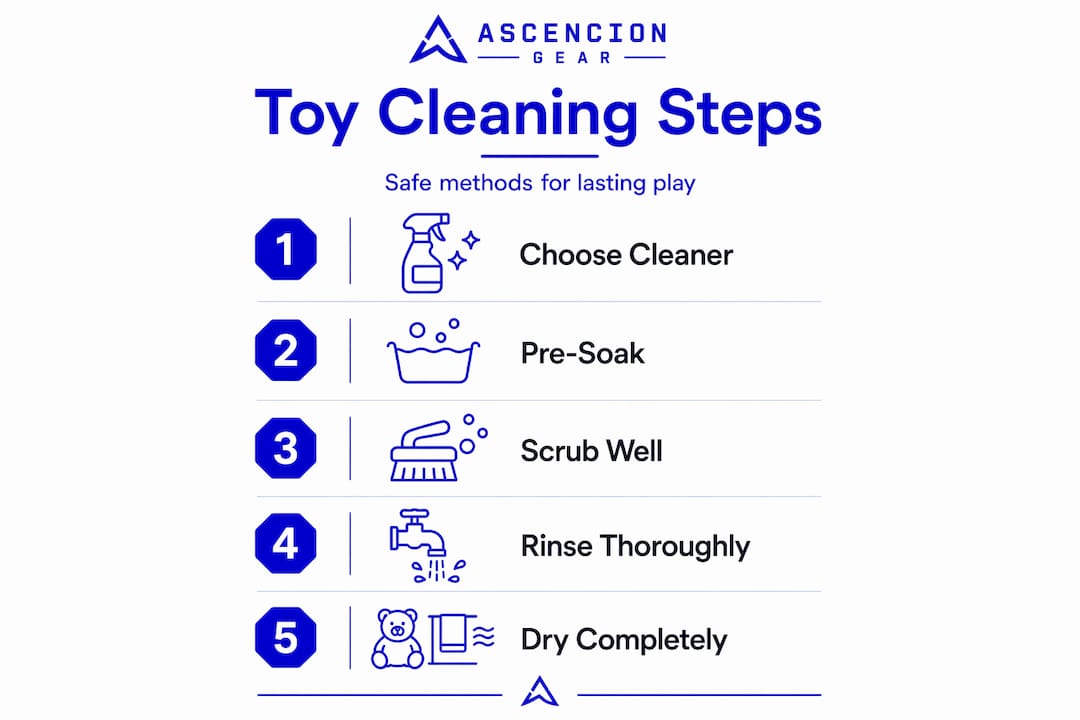
- Remove any visible debris by shaking or brushing the toy off outside.
- Place the toy inside a mesh laundry bag to protect it during the wash cycle.
- Wash on a gentle cycle with mild detergent and select an extra rinse cycle if your machine offers one.
- Check that all soap is rinsed out by squeezing the toy under clean water before drying.
- Air dry completely for 24 to 48 hours. Do not machine dry on heat. Heat can melt squeakers, shrink stuffing, or weaken seams. Lay flat or hang in a ventilated space.
For no stuffing plush toy care, the process is nearly identical but drying time is significantly shorter since there is no dense stuffing to trap moisture inside.
Rubber and silicone toys
- Knock out any dried treat or food residue before soaking.
- Fill a basin with warm water and add a small amount of unscented dish soap.
- Soak for 10 to 15 minutes.
- Scrub inside all channels, holes, and grooves with a brush. Treat residue hides in these spaces and can grow mold within 48 hours.
- For hard toys and rubber toys, you can also use the top rack of a dishwasher without detergent, or with a very small amount of plain detergent and an extra rinse.
- Rinse under running water until the water runs completely clear and the toy surface does not feel slippery.
- Air dry for 2 to 4 hours before returning to your dog.
Rope toys
- Rinse under warm water to loosen surface dirt.
- Soak in warm soapy water for 10 minutes.
- Scrub the fibers with a brush, working along the strands.
- Rinse very thoroughly. Rope fibers hold soap longer than hard surfaces.
- Air dry in direct sunlight when possible. Sunlight helps kill bacteria and prevents mildew from forming in the fibers.
Vinegar soak method for non-porous toys
A diluted vinegar solution of equal parts white vinegar and water works well for hard rubber, silicone, and plastic toys. Soak for 10 to 15 minutes, then rinse completely. The vinegar smell disappears once the toy is dry.
Comparison table: cleaning by toy type
| Toy type | Cleaning method | Soak time | Drying time | Key watch-out |
|---|---|---|---|---|
| Plush (stuffed) | Machine wash, gentle cycle | No soak | 24 to 48 hours | Heat damages squeakers |
| Plush (no stuffing) | Machine wash, gentle cycle | No soak | 4 to 8 hours | Still check for full dryness |
| Rubber and silicone | Hand wash or dishwasher top rack | 10 to 15 min | 2 to 4 hours | Scrub all crevices |
| Rope | Hand wash | 10 min | 12+ hours | Sun dry to prevent mildew |
| Hard plastic | Hand wash or dishwasher | 10 to 15 min | 1 to 2 hours | Check for cracks before washing |
Pro Tip: Set a phone reminder for the next morning when you put plush toys out to dry. A toy that feels dry on the outside can still hold moisture in the center, especially in humid climates.
With these cleaning methods in mind, let’s look at common cleaning mistakes and how to avoid them for safer toy care.
Common mistakes dog owners make when cleaning toys and how to avoid them
Most cleaning errors fall into two categories: using the wrong product, or skipping the final steps. Both create problems that are easy to avoid.
The biggest mistakes:
- Using bleach or ammonia-based products. Residual cleaning agents left on toys can cause oral irritation or gastrointestinal upset in dogs. Bleach does not fully rinse from porous materials.
- Using fabric softeners. These coat fabric fibers and leave a film that dogs ingest during chewing or mouthing.
- Adding essential oils to cleaning water. Many essential oils are toxic to dogs even in small amounts.
- Not rinsing enough. A toy that still feels slightly slippery after rinsing still has soap on it. Keep rinsing.
- Drying on high heat. Machine drying damages plush toys and can cause structural failures that create choking hazards.
- Skipping the inspection step. Cracked rubber, frayed rope ends, and broken seams all harbor bacteria in ways that cleaning cannot fully address. If a toy is deteriorating, replace it.
On hydrogen peroxide: Hydrogen peroxide is not safe for routine dog toy cleaning. It can irritate skin and mucous membranes, degrade materials, and should only be used in 3% concentration when a veterinarian specifically recommends it for disinfecting after illness.
One overlooked mistake: using a single tub or sink without rinsing it between steps. If you cleaned something else with bleach and then fill the same sink for toy washing, trace bleach transfers to the toys.
Pro Tip: After washing, smell the toy. If you detect any soapy or chemical scent, rinse again. Your dog’s nose is far more sensitive than yours, and even a faint residue is noticeable to them.
For guidance on safe toy introduction tips when bringing home freshly cleaned or new toys, a gradual reintroduction helps dogs adjust without stress.
Understanding these mistakes helps ensure your cleaning routine keeps toys safe and hygienic. Next, we’ll explore how often to clean toys for best results.
How often to clean your dog’s toys and how to maintain hygiene between washes
Frequency matters as much as method. A perfectly executed cleaning done once a month still leaves weeks of bacterial growth between sessions.
Recommended cleaning schedule:
- Daily or every other day: Meal-dispensing toys, treat-stuffing toys (like rubber chews filled with peanut butter or kibble). Food residue begins breaking down within hours and creates bacterial growth quickly.
- Weekly: Regular chew toys, plush toys, rope toys used indoors. Weekly washing prevents odor buildup and keeps bacteria counts low without over-stressing the toy materials.
- Immediately: Any toy used outdoors in soil, grass, or water. Any toy a sick dog has used. Any toy shared at doggy daycare or a dog park. These situations require immediate cleaning to prevent cross-contamination and pathogen spread.
Between full washes:
- Wipe rubber and hard toys with a warm, damp cloth after each use.
- Let toys dry before returning them to a toy bin. A closed bin of damp toys becomes a breeding ground for mold.
- Rotate your dog’s toy collection. A toy that sits unused for a week while another toy gets daily use both extends wear and gives you a natural break to clean and dry the resting toys.
- Do a quick visual inspection every few days. Fraying, cracking, or discoloration are signs a toy needs cleaning or replacement.
Toy safety and hygiene are directly connected. A toy too damaged to clean properly is also a toy too damaged to be safe.
Regular cleaning schedules help prevent problems, but a fresh perspective can deepen how we think about toy hygiene and pet health.
Rethinking dog toy cleanliness: why gentle care wins over harsh sanitization
Here is something most dog toy hygiene advice misses: the goal is not sterilization. Chasing a hospital-level clean on your dog’s chew toy creates more risk than it eliminates.
Strong disinfectants can degrade rubber compounds over time, making toys more prone to cracking and flaking. Fragments from a deteriorating rubber toy are a choking and ingestion hazard. You cleaned aggressively to protect your dog, but the cleaning itself caused the damage. This is not a hypothetical. It happens when owners use bleach solutions repeatedly on rubber toys in an attempt to keep them perfectly sanitary.
The primary danger in cleaning dog toys is not dirt. It is the residual cleaning agents left behind. That reframes the entire job. Your job is not to kill every microbe. Your job is to remove visible contamination, reduce odor, and rinse so completely that no product remains.
Mild detergent, thorough scrubbing, complete rinsing, and full drying handles that job on every material without creating new problems. Over-cleaning with strong products does the opposite: it strips protective surfaces, shortens toy life, and introduces chemical hazards.
The practical upshot is this: build a consistent routine around durability and safety in dog toy care, not around extreme sanitization. A toy cleaned gently every week lasts longer and stays safer than one scrubbed with bleach every month.
Safe and fun: keep your dog’s toys fresh with Ascencion Gear
Cleaning is much easier when your toys are designed to handle it. At Ascencion Gear, the toys are built with that in mind.
Our no stuffing squeaky dog toys are machine washable and dry faster than traditional stuffed toys because there is no dense filling to hold moisture. That means cleaner toys with less effort. Our interactive squeaky puzzle dog toys give dogs mental stimulation during play and are designed to hold up through regular washing cycles. For variety and value, our plush squeaky dog toy sets let you rotate toys through the wash without leaving your dog without something to play with. Fewer replacements. Safer playtime. Less guesswork.
Frequently asked questions
Can I use bleach or harsh chemicals to clean my dog’s toys?
No. Bleach and ammonia leave toxic residues that can harm your dog if ingested. Use mild, pet-safe detergents and natural solutions like diluted white vinegar instead.
How do I clean dog toys with squeakers without damaging them?
Use a gentle machine wash cycle inside a mesh laundry bag or hand-wash with mild detergent, rinse completely, then air-dry 24 to 48 hours to prevent moisture damage and preserve the squeaker mechanism.
Is hydrogen peroxide safe to clean my dog’s toys?
Generally no. Hydrogen peroxide should only be used at 3% concentration with thorough rinsing and only when a veterinarian specifically recommends it. Routine use can irritate your dog and damage toy materials.
How often should I clean my dog’s toys?
Treat-dispensing toys daily or every other day; plush and regular chew toys weekly; and any toy used outdoors or by a sick dog should be cleaned immediately.
Can baking soda and vinegar effectively clean dog toys?
Yes. Baking soda is non-toxic and effective on many toy materials, and a 1:1 white vinegar and water solution disinfects non-porous toys well, as long as you rinse thoroughly afterward.