

Most dog owners assume the toughest toy on the shelf is the safest choice for an aggressive chewer. That assumption leads to broken teeth, vet bills, and a frustrated dog who has lost interest in toys entirely. The real goal is finding toys that are durable enough to last but flexible enough to protect your dog’s teeth and gums. This guide covers how to evaluate materials, apply a simple safety check, spot the best bundle deals, and shop confidently as an international buyer.
Table of Contents
- Understanding durability and safety in dog toys
- Materials for aggressive chewers: which is best?
- How to spot budget-friendly bundles and themed sets
- Global shopping tips: getting international products safely
- Why durability is misunderstood: lessons from global buyers
- Shop premium, safe dog toys and bundles worldwide
- Frequently asked questions
Key Takeaways
| Point | Details |
|---|---|
| Indentation test is vital | Dog toys should pass the fingernail indentation check to ensure oral safety. |
| Material matters most | Choose flexible, tough materials that match your dog’s chewing style. |
| Bundles increase value | Buying bundled toy sets saves money and offers more variety for budget owners. |
| Safety over marketing | Prioritize toys that meet proven safety guidelines, not just ‘indestructible’ branding. |
Understanding durability and safety in dog toys
Durability in a dog toy does not mean maximum hardness. A toy that cannot be scratched, bent, or compressed is often more dangerous than a toy that shows some give. The goal is a toy that resists destruction without creating a hazard in the process.
A simple and widely used safety check is the indentation test. Press your fingernail firmly into the toy’s surface. If you can leave a small mark, the material has enough flex to be safe for your dog’s teeth. If your nail slides off without any impression, the toy is likely too hard. Experts recommend toys that are durable but not so hard they can damage teeth, and the indentation test is the most practical field check available to any buyer.
Understanding dog toy materials also means knowing how each one fails. Rubber can gouge and tear in chunks. Nylon can chip into sharp fragments. Plush can be gutted and ingested. Each failure mode carries its own risk, so matching the material to your dog’s chewing style matters as much as choosing a tough product.
“A toy that survives a chewing session without harming the dog is durable. A toy that survives but cracks a molar is just expensive.”
Top risks of ultra-hard toys for aggressive chewers:
- Broken or cracked teeth from repeated impact on inflexible surfaces
- Gum lacerations from sharp edges that form when hard materials chip
- Jaw strain from extended chewing on materials with zero give
- Ingestion of large hard fragments that splinter off during use
- Loss of interest in toys when chewing becomes uncomfortable or painful
| Risk factor | Soft/flexible toy | Ultra-hard toy |
|---|---|---|
| Tooth fracture | Low | High |
| Gum injury | Low | Medium to high |
| Fragment ingestion | Medium | High |
| Long-term chewing interest | High | Low |
| Overall safety rating | High | Low to medium |
Materials for aggressive chewers: which is best?
Picking the right material is the single most important decision for aggressive chewer toy shopping. The wrong material either gets destroyed in minutes or becomes a dental hazard. The right one lasts weeks and keeps your dog engaged safely.
Rubber is the most forgiving material for aggressive chewers. Natural and thermoplastic rubber varieties offer a combination of toughness and flex that passes the indentation test easily. Rubber toys also tend to be easy to clean and often double as treat dispensers. The downside is that very powerful chewers can tear chunks off lower-quality rubber products. Look for rubber chew toys that are labeled as natural rubber or reinforced thermoplastic rubber for the best results.
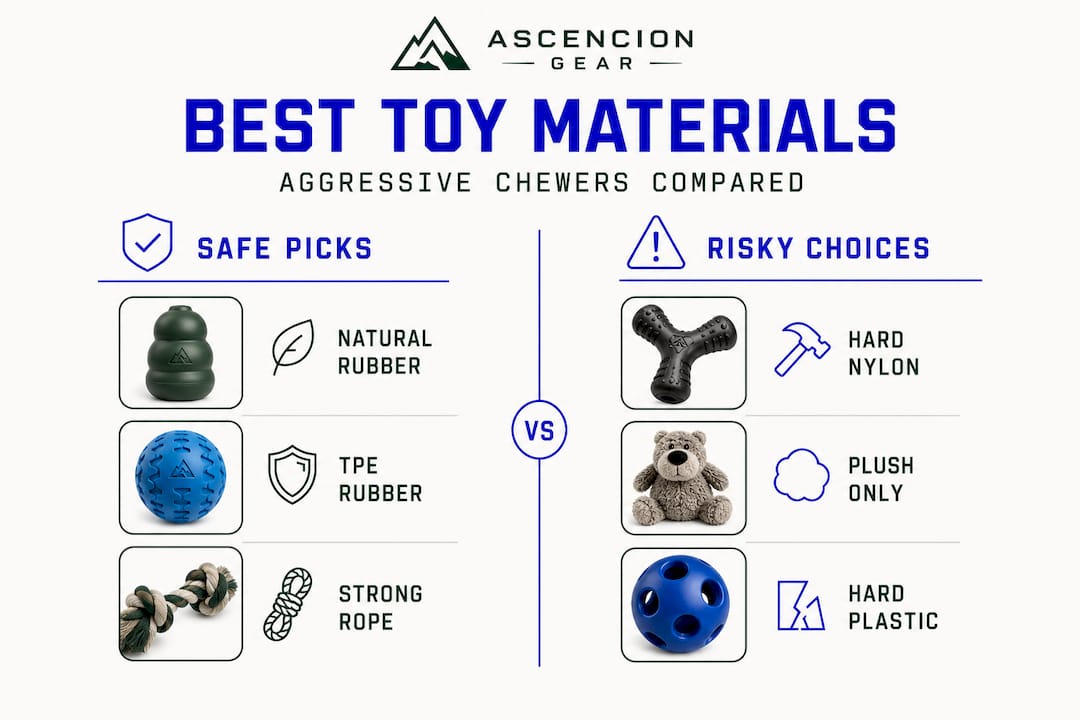
Nylon is popular because of its extreme resistance to tearing. However, nylon presents a specific risk: it can chip into sharp fragments under intense pressure. Nylon chew toys work best for dogs who are persistent chewers rather than power biters. If your dog tends to clamp down and shake, nylon may not be the safest first choice. Nylon chew bones designed specifically for large and medium breeds are engineered with slightly more flex than standard nylon, which reduces the chipping risk.
Plush toys are not designed for aggressive chewers on their own, but they serve an important role in multi-toy bundles. Dogs benefit from variety, and a plush toy used for fetch or light play gives the jaw a rest between harder chewing sessions.
As safety research on power chewers confirms, tougher should not mean too hard. Matching hardness and material flex to your dog’s specific bite style is the key variable. A large breed power biter needs a different material than a medium breed persistent chewer.
| Material | Durability | Safety for teeth | Best for | Failure mode |
|---|---|---|---|---|
| Natural rubber | High | High | All aggressive chewers | Tearing in chunks |
| Nylon | Very high | Medium | Persistent chewers | Chipping into fragments |
| Thermoplastic rubber | High | High | Power biters | Surface gouging |
| Plush | Low | High | Light play and fetch | Gutting and ingestion |
| Composite materials | Very high | Medium to high | Large breed chewers | Varies by composition |
Steps to match material to your dog’s chewing habits:
- Observe your dog’s chewing style. Does your dog bite and hold, or bite and shake?
- Measure bite force by watching how quickly your dog destroys a standard rubber toy.
- Apply the indentation test to any toy before purchasing.
- Start with rubber for most aggressive chewers and upgrade to composite or nylon only if rubber is destroyed within a week.
- Rotate materials to prevent boredom and reduce wear on any single toy.
Pro Tip: Choose toys with textured surfaces and a slightly flexible design. Textures help clean teeth during chewing, and flex reduces the impact force on enamel with every bite.
How to spot budget-friendly bundles and themed sets
Once you know the right toy type, the next step is getting the most value from your purchase. Bundles are one of the best tools available to budget-conscious dog owners, especially for international buyers who want to minimize shipping costs.

Bundles come in several formats. Value bundles pack multiple toys of similar material into one order, lowering the per-unit cost significantly. Themed bundles group toys around a concept, such as holidays, seasons, or characters, and often include a mix of plush, rubber, and chew toys. Seasonal bundles are released around specific times of year and frequently include sale-exclusive products that are not sold individually.
The aggressive chewer bundle format is particularly useful because it combines toys tested specifically for power biters. Instead of buying one toy at a time and guessing at durability, a curated bundle gives you a tested selection in a single purchase.
Practical tips for evaluating bundle deals:
- Check that the bundle includes toys from more than one material category for variety.
- Verify that the total bundle price is lower than the sum of individual item prices.
- Look for bundles that include at least one treat-compatible toy to extend engagement time.
- Confirm that all items in the bundle are appropriate for your dog’s size and weight class.
- Read individual product reviews within the bundle, not just the overall bundle rating.
- Check whether the bundle ships as one package or multiple, which affects international shipping costs.
Pro Tip: Bundles often include sale-exclusive products not sold individually. If you see a toy in a bundle that you cannot find listed separately on the site, that is a strong indicator of bundle-only value.
For international buyers, bundles offer a specific financial advantage. Shipping one package with five toys costs far less per toy than shipping five separate orders. Many global buyers report saving 30 to 50 percent on per-unit shipping costs by consolidating purchases into bundles.
Global shopping tips: getting international products safely
International buyers face a set of challenges that domestic shoppers rarely encounter. Verifying product safety, understanding material sourcing, and confirming that a seller ships reliably to your country all require extra steps.
The first step is checking for material transparency. A trustworthy seller will clearly list what the toy is made from, including the specific type of rubber or nylon used. Vague descriptions like “durable material” or “tough polymer” are red flags. Specific material names like natural rubber, thermoplastic rubber, or food-grade nylon indicate a seller who understands their product.
The second step is applying the indentation test standard even when shopping online. Look for product descriptions or reviews that mention flex, give, or softness. If multiple reviewers describe a toy as rock hard or note that their dog showed no interest in chewing it, that is indirect evidence the toy may be too rigid. Safety guidelines for aggressive chewers consistently emphasize that the indentation test is a reliable proxy for tooth safety, and you can apply this standard to written descriptions before buying.
Understanding the causes of destructive chewing also helps international buyers make better selections. Dogs who chew destructively out of anxiety need toys with more sensory engagement, like textured rubber. Dogs who chew out of boredom need variety, which makes bundles an especially good fit.
Safety criteria and buying tips for international buyers:
- Confirm the seller ships to your country before adding items to your cart.
- Check for safety certifications such as ASTM or EN71 compliance listed in the product description.
- Read negative reviews specifically for mentions of chipping, splintering, or sharp edges.
- Verify that the return or exchange policy covers international orders.
- Look for sellers who post photos of real dogs using the products, not only studio product shots.
- Confirm that bundle packaging is secure enough for international transit.
Pro Tip: Look for sellers that clearly explain their quality tests and show proof. A product page that includes drop test results, material sourcing details, or third-party lab testing information is a strong indicator of a seller who prioritizes safety over marketing claims.
One often overlooked factor for global buyers is currency and pricing transparency. Some international pet product sellers display prices in USD but charge in a different currency at checkout, creating unexpected conversion fees. Confirm the checkout currency before completing any international purchase.
Why durability is misunderstood: lessons from global buyers
The conventional wisdom in dog toy marketing is straightforward: tougher is better. This message sells products, but it does not reflect how dogs actually interact with toys or how teeth actually sustain damage. Many buyers around the world have learned this lesson the hard way.
The most common pattern is this: a buyer sees a toy marketed as “indestructible,” pays a premium price, and then watches their dog lose interest within days because the toy offers no sensory feedback. Or worse, the dog develops a tooth crack that only shows up at the next vet visit. Neither outcome is good value.
Global buyers, particularly those shopping across currency barriers and shipping distances, tend to develop a sharper eye for this problem because every purchase carries higher stakes. When you are paying international shipping on top of a product price, a toy that fails quickly is a much more expensive mistake. This has pushed many international buyers toward flexible, tested materials like natural rubber over ultra-hard alternatives.
The real lesson from durable toy insights gathered across global markets is that durability is about balance, not extremes. A toy that lasts six weeks and keeps a dog engaged safely is more durable in any practical sense than a toy that survives a year but gets ignored after the first session.
Marketing language like “indestructible” and “ultra-tough” should be treated as starting points for investigation, not conclusions. The indentation test, material transparency, and honest buyer reviews are more reliable guides than any headline claim on a product page.
Shop premium, safe dog toys and bundles worldwide
You now have a clear framework for selecting safe, durable toys and maximizing your budget with smart bundle purchases.
Ascencion Gear offers a curated selection built specifically for aggressive chewers and budget-focused buyers. The aggressive chewer bundle brings together tested, durable toys in one order, saving you time and shipping costs. For broader variety, browse the full range of money-saving pet bundles that mix materials, sizes, and toy types for dogs at every chewing level. If your dog also enjoys lighter play sessions, the fruit and veggie plush set adds squeaky, colorful variety to any toy rotation. All orders ship across the US with clear product descriptions and material details you can trust.
Frequently asked questions
How can I check if a chew toy is safe for my aggressive chewer?
Press your fingernail into the toy surface. If you can make an indentation, it is likely safe for your dog’s teeth and gums.
Are bundles better than buying toys individually?
Bundles offer lower per-unit cost, material variety, and often include exclusive products not available as standalone purchases, making them a stronger value for most buyers.
What material should I pick for an aggressive chewer?
Natural rubber and thermoplastic rubber are the safest starting points. Nylon and composite materials work well for persistent chewers but should always pass the indentation test before use.
How do international buyers verify product safety?
Check for clear material testing details, third-party certifications, and honest buyer reviews that mention durability and safety before completing any international order.