

Most dog owners assume a toy sold in a pet store is safe by default. That assumption is wrong. Thousands of pets are treated annually for injuries from unsafe or poorly designed toys, with physical hazards causing blockages, broken teeth, and lacerations. Understanding what makes a dog toy safe goes well beyond grabbing something colorful off a shelf. This guide breaks down the physical features, chemical risks, and material standards that actually protect your dog during playtime.
Table of Contents
- Key takeaways
- What makes a dog toy safe: physical features first
- Chemical safety and toxic materials to avoid
- Durability and material quality
- How to introduce and maintain toys safely
- My take on what most owners get wrong
- Safe toys your dog will actually use
- FAQ
Key takeaways
| Point | Details |
|---|---|
| Size matters most | A toy that fits fully in your dog’s mouth is a choking hazard regardless of material. |
| Toxic materials are common | Cheap toys often contain BPA, phthalates, and lead that harm dogs over time. |
| Natural rubber and silicone win | These are the safest, most durable materials for most dogs and chewing styles. |
| Supervise new toys always | Watch your dog with any new toy to catch problems before they become emergencies. |
| Certifications are your filter | Look for BPA-free labels, FDA-compliant materials, and ASTM F963 certification. |
What makes a dog toy safe: physical features first
The physical design of a toy is the first line of defense. A well-built toy keeps your dog from breaking off pieces, swallowing stuffing, or getting hurt by sharp edges. Physical and chemical safety are distinct but equally important concerns, and it helps to evaluate them separately.
Size and fit
Toy size relative to your dog’s breed and mouth is non-negotiable. A toy that fits whole in a dog’s mouth is an immediate choking hazard, regardless of what material it is made from. A Kong designed for a Chihuahua becomes a swallowing risk for a Labrador. When in doubt, go larger.
Here are the physical safety features worth checking before any toy goes home:
- No small detachable parts. Eyes, buttons, and plastic accessories on plush toys can detach and be swallowed in seconds.
- No sharp edges. Inspect seams, injection points on plastic toys, and any hard edges that could cut gums or cheeks.
- Minimal or no stuffing. Poly-fill stuffing is not digestible. If your dog tears open a plush toy and eats the stuffing, a vet visit may follow.
- Durable stitching. Plush toys should use double-stitched seams that resist pulling and shaking.
- No string or ribbon elements. Linear foreign bodies are among the most dangerous items a dog can ingest.
Pro Tip: Use the thumbnail test. Press your thumbnail firmly into the toy’s surface. If it leaves no impression, the toy is likely too hard for safe chewing, especially for puppies, seniors, or dogs with existing dental problems.
Regular inspection is part of the deal. A toy that was safe last week may not be safe today. Remove any toy the moment it shows cracks, tears, or broken pieces. The fit-in-the-mouth test is a quick, practical check every time you hand your dog something new: if the whole toy could fit inside their mouth, it is the wrong size.
Chemical safety and toxic materials to avoid
Physical hazards are visible. Chemical hazards are not. This is where most dog owners are caught off guard, and it is arguably the more serious concern for long-term health.
The pet industry generates about 300,000 tons of plastic waste annually from pet toys in the US, and many of those conventional toys contain chemicals that affect a dog’s health through repeated chewing and licking.
Common toxic materials in dog toys
Cheap imported plastics often contain lead, phthalates, and PVC as well as synthetic dyes that leach when chewed. Lead exposure causes neurological damage. Phthalates disrupt the endocrine system. BPA mimics estrogen and has been linked to cancer risk in animal studies. These are not remote risks. A dog that chews a toy for twenty minutes a day is getting significant exposure over weeks and months.
Here is a quick breakdown of what to watch for and what to use instead:
| Avoid | Safe alternative |
|---|---|
| BPA (bisphenol A) | BPA-free certified materials |
| Phthalates | Natural rubber or food-grade silicone |
| Lead-based paint or dyes | Non-toxic, water-based dyes |
| PVC (polyvinyl chloride) | Organic cotton or hemp fabric |
| Synthetic foam stuffing | No stuffing or natural fiber fill |
What safe materials look like
Natural rubber and food-grade silicone are the safest options for chew toys. Both are FDA-compliant, free from BPA and phthalates, and durable enough to hold up under most chewing styles. Organic cotton and hardwood are solid choices for fabric and fetch toys. For guidance on how these materials perform across breeds, Ascenciongear’s breakdown of non-toxic material standards is worth reading.
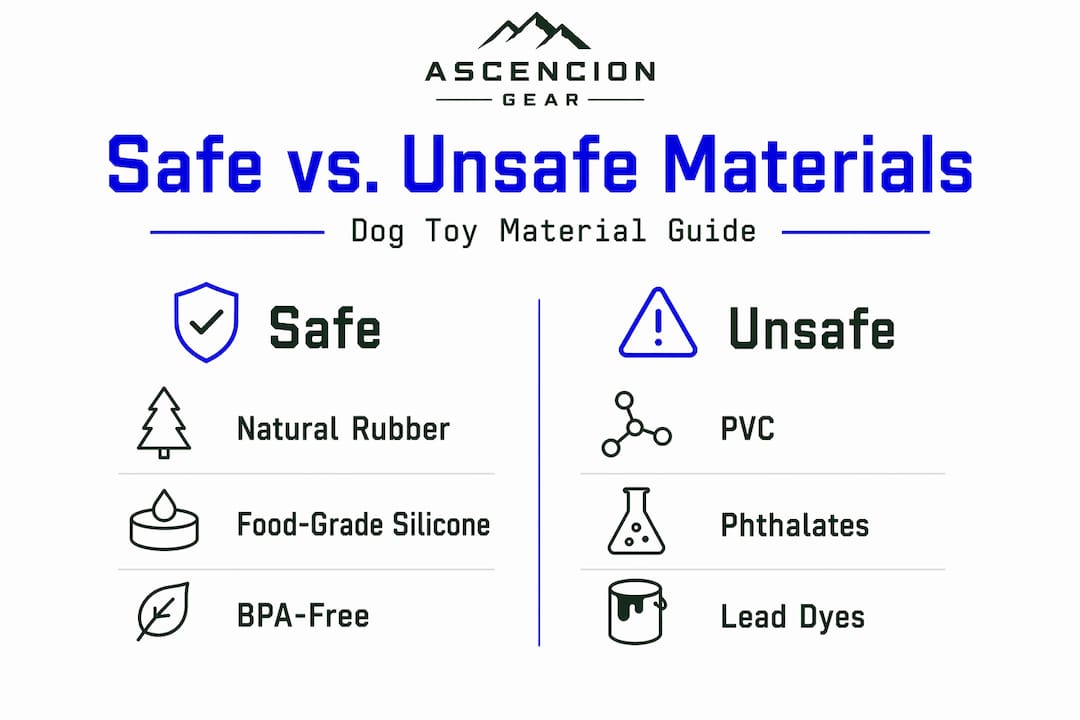
Certification standards such as ASTM F963 and FDA food-grade compliance are reliable markers for chemical safety. ASTM F963 is the US toy safety standard used for children’s toys, and some manufacturers apply it to pet products as a credibility signal. Not every safe toy will have this label, but its presence is meaningful.
Pro Tip: Check the country of manufacture. Toys made in countries with stricter manufacturing regulations tend to have fewer toxic material issues. US-made products often have more transparent material disclosure.
Durability and material quality
A toy that falls apart quickly is not just a waste of money. It is a safety risk. Broken pieces become choke hazards. Exposed filling becomes a digestive hazard. This is where durability and safety overlap directly.

Matching durability to chewing style
Dogs fall into three general chewing categories: gentle chewers, moderate chewers, and aggressive chewers. A plush squeaker that is fine for a Cavalier King Charles Spaniel is destroyed in sixty seconds by a Rottweiler. Choosing the wrong durability level for your dog’s chewing intensity is one of the most common mistakes owners make.
| Chewing style | Recommended materials | What to avoid |
|---|---|---|
| Gentle chewer | Soft plush, thin rubber, fabric | No specific concerns |
| Moderate chewer | Thick natural rubber, canvas | Thin plastic, light plush |
| Aggressive chewer | Dense rubber, nylon alternatives | Cheap plastic, small plush |
Indestructible claims are often marketing and not regulated. No toy is truly indestructible. What that label actually tells you is nothing specific about safety or certification. Experts consistently emphasize looking beyond those marketing claims and focusing instead on manufacturer certifications and named materials.
For a more detailed material comparison across chewing styles, Ascenciongear’s guide on durable toy materials covers this well.
Pro Tip: Durable toys are also more sustainable. A toy that lasts six months instead of one week means less plastic waste and fewer replacement purchases. Choosing quality the first time is both safer and more cost-effective.
Environmental sustainability in dog toys is directly tied to selecting durable, non-toxic materials. This is not just a green concern. It is a practical one. Less degrading material means fewer particles your dog ingests over time.
How to introduce and maintain toys safely
Knowing what makes a toy safe on paper is step one. Actually managing toys safely in real life is step two. These two things are not the same.
Introduce new toys one at a time, supervise play, and remove damaged toys immediately. This approach sounds obvious, but most owners skip parts of it. Here is how to apply it properly:
- Introduce one toy at a time. New toys should be given individually so you can watch how your dog interacts with them. Multiple new toys at once makes it impossible to identify which one caused a problem.
- Supervise the first play session fully. Watch for aggressive chewing, attempts to swallow pieces, or signs that the toy is breaking down faster than expected.
- Inspect toys weekly. Look for cracks in rubber, torn seams in plush toys, exposed squeakers, or any piece that has loosened or separated.
- Remove damaged toys immediately. Do not wait until a toy is destroyed. Remove it when you first notice damage. Delayed removal is how ingestion accidents happen.
- Clean toys regularly. Rubber and silicone toys can be washed in warm soapy water or run through the dishwasher on the top rack. Fabric toys can usually be machine washed. For specifics, Ascenciongear’s toy cleaning guide covers the full process.
- Rotate the toy supply. Keeping six toys out all the time means your dog ignores most of them. Rotating three toys every few days keeps engagement high and gives you a chance to inspect toys before they go back into rotation.
Mental stimulation from puzzle toys reduces destructive behavior. This is relevant to safety too. A bored dog is more likely to chew inappropriate objects, including unsafe ones. Keeping your dog engaged with properly selected toys is itself a form of safety management.
My take on what most owners get wrong
I’ve spent a lot of time looking at dog toy safety from multiple angles, and the same blind spot shows up over and over. Most owners focus entirely on physical hazards while treating chemical safety as an afterthought. They will size a toy correctly and check for loose parts, but they never flip the toy over to read the materials list.
The other thing I’ve learned is that “indestructible” toys are not always safer. Some ultra-hard nylon and plastic toys market themselves as built for aggressive chewers, but hard toys can cause fractured molars in senior dogs or any dog with existing dental issues. A toy that does not break is not inherently safe. It might just transfer the damage from the toy to the dog’s teeth.
I also think price anxiety leads people toward poor decisions. A cheap toy from an unknown brand is genuinely more likely to contain toxic materials and fail structurally faster. Spending a few dollars more on something with clear material disclosure and a recognizable certification is not a luxury. It is a reasonable baseline for any dog that chews.
My honest advice: treat every new toy as unverified until you have read the label, done the thumbnail test, and watched your dog play with it for the first session. That process takes about ten minutes total, and it catches most problems before they matter.
— Thomas
Safe toys your dog will actually use
Ascenciongear carries dog toys designed with the safety features covered in this guide: no stuffing to ingest, squeakers that stay put, and construction built for real chewing. The no-stuffing squeaky chew toy is a strong option for dogs that destroy plush toys fast. For mental engagement, the hide and seek puzzle toy set keeps dogs focused and working, which reduces destructive chewing overall. Every product in the Ascenciongear catalog is selected with durability, safety, and real-world use in mind.
FAQ
What physical features make a dog toy safe?
A safe dog toy is sized so it cannot fit entirely in your dog’s mouth, has no detachable small parts, uses durable construction without sharp edges, and contains no loose stuffing that can be swallowed.
Are rubber dog toys safe?
Natural rubber dog toys are among the safest available. They are free from BPA and phthalates, FDA-compliant, and durable enough to hold up under regular chewing without breaking into hazardous pieces.
What materials should I avoid in dog toys?
Avoid toys made with BPA, phthalates, lead-based dyes, PVC, and synthetic foam stuffing. These materials are common in cheap imported plastic toys and pose real health risks with repeated chewing exposure.
How often should I inspect my dog’s toys?
Inspect toys at least once a week. Remove any toy immediately when you notice cracks, torn seams, exposed squeakers, or pieces that have broken off, regardless of how recently you purchased it.
Do “indestructible” labels mean a toy is safer?
No. Indestructible is an unregulated marketing claim. Some hard toys marketed as indestructible can actually fracture a dog’s teeth, particularly in senior dogs or those with existing dental problems.