

Your dog has a basket full of toys, but still chews your furniture, barks at nothing, and digs up the backyard. Sound familiar? The problem is rarely a lack of toys. It’s a lack of the right kind of stimulation. Understanding what are interactive dog toys and how they differ from ordinary playthings is the first step toward fixing boredom-driven behavior for good. This guide breaks down the types, benefits, and practical selection tips you need to make informed choices for your dog.
Table of Contents
- Key takeaways
- What are interactive dog toys?
- Types of interactive dog toys
- The role of interactive dog toys in behavior and health
- How to choose and introduce interactive toys
- Understanding the interactive toy market
- My take on what actually makes these toys work
- Explore interactive dog toys at Ascenciongear
- FAQ
Key takeaways
| Point | Details |
|---|---|
| Interactive toys engage the mind | They require problem-solving, not just chewing or chasing, which is what ordinary toys don’t offer. |
| Behavior improves with regular use | Daily puzzle play can reduce idle chewing by nearly 30 minutes and cut boredom signs by around 25%. |
| Match the toy to your dog | Breed, age, and chewing strength all determine which toy is safe and actually engaging for your dog. |
| Rotate toys weekly | Changing toys regularly preserves novelty and keeps your dog mentally invested over the long term. |
| Toys support training, not replace it | Interactive toys work best alongside exercise and training, not as a substitute for either. |
What are interactive dog toys?
Interactive dog toys are toys specifically designed to engage your dog’s mind alongside its body. Unlike a simple rubber chew or a stuffed animal your dog destroys in minutes, these toys require your dog to do something to get a reward. That might mean sliding panels to uncover a treat, spinning a dial, or rolling a ball to release kibble. The engagement is the point.
Here is how interactive toys compare to standard ones at a glance:
| Feature | Standard toys | Interactive toys |
|---|---|---|
| Mental engagement | Minimal | High |
| Reward mechanism | None | Treat, sound, or movement |
| Problem-solving required | No | Yes |
| Suitable for solo play | Sometimes | Mostly yes |
| Reduces destructive behavior | Limited | Documented yes |
Puzzle complexity stimulates brain function and builds mental sharpness over time, which is something a squeaky ball simply cannot do. The reward-based structure also mirrors how dogs learn in training, which is why these toys have such a measurable effect on behavior.
The main functions you will see across interactive toys include:
- Puzzle solving: Dogs manipulate compartments, sliders, or lids to uncover hidden treats
- Treat dispensing: Rolling or wobbling toys release food at intervals to encourage focus
- Sensory stimulation: Lick mats, crinkle textures, and squeakers engage multiple senses
- Owner-involved play: Fetch launchers and tug toys that require your participation
- Electronic interaction: Motion-activated or app-controlled toys that move independently
Each of these formats serves a different need. A dog with separation anxiety benefits more from a lick mat than a motion-activated toy. A high-energy border collie needs something harder to solve. Matching the format to the dog matters as much as buying the toy in the first place.
Types of interactive dog toys
The category has expanded significantly. Here is what you will actually find on shelves and online today, with honest notes on what each type does well.
Puzzle toys are the backbone of the category. They feature sliding pieces, rotating discs, flip lids, and hidden compartments. Beginner puzzles have one or two steps. Advanced puzzles require dogs to complete multiple actions in sequence before a treat drops. These work especially well for intelligent breeds like Australian Shepherds, Poodles, and Dachshunds.
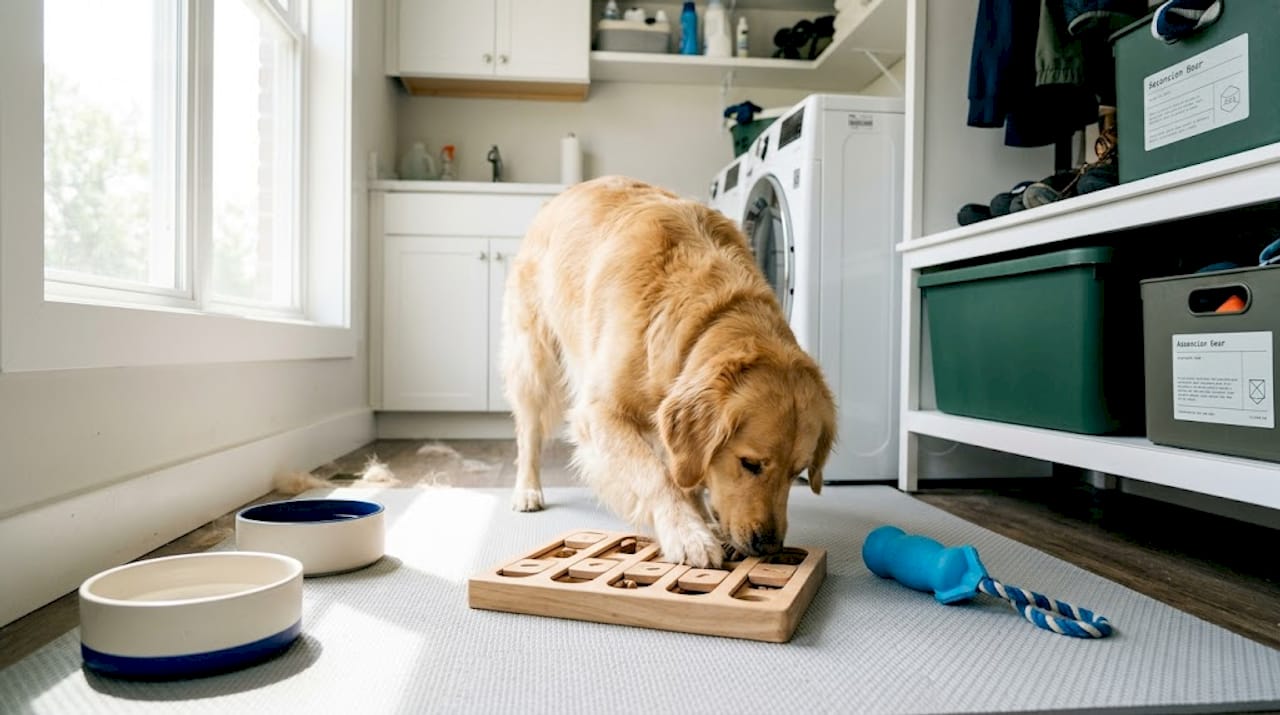
Treat-dispensing toys reward movement. Your dog rolls, nudges, or bats a ball or wobble toy, and kibble falls out. These are excellent for slowing down fast eaters and keeping dogs occupied during alone time. The Double Ball Slow Feeder is a practical example that works across dog sizes.
Lick mats spread peanut butter, wet food, or yogurt into textured grooves. The repetitive licking action activates a calming response, making these especially useful before vet visits, grooming sessions, or thunderstorms. They are low-stimulation toys but genuinely effective for anxiety.
Smart and electronic toys are the fastest-growing segment. Motion-activated balls, laser toys, and remote-controlled devices like the Self-Rolling Interactive Dog Ball give dogs something unpredictable to chase, which prevents the quick boredom that fixed toys cause. These are useful for active dogs who have already mastered basic puzzles.
Owner-involved fetch and tug toys fall under interactive play too, because what is interactive dog play if it does not include you? These toys build your bond with your dog and provide physical exercise alongside mental engagement.
Pro Tip: Start with a Level 1 or Level 2 puzzle toy before moving to advanced designs. A dog that can’t solve a toy in the first few tries will give up and never go back to it.
The role of interactive dog toys in behavior and health
This is where the data gets useful. Dogs that receive consistent mental stimulation show fewer destructive behaviors, and the numbers back that up. Interactive puzzles reduce idle chewing by nearly 30 minutes and lower boredom-related behaviors by about 25% when included in a daily routine.
The reason is biological. Interactive toys trigger dopamine release in dogs, providing a neurochemical reward that makes problem-solving feel good. When your dog figures out how to unlock a compartment, the brain releases the same pleasure signal it gets from chasing prey. That satisfaction reduces the drive to chew baseboards or dig under the fence.
Other documented benefits include:
- Reduced barking: Dogs preoccupied with a puzzle have less idle time to react to sounds
- Lower anxiety: Structured activity gives dogs a predictable outlet for nervous energy
- Slower eating: Treat-dispensing toys prevent bloat and digestive issues in fast eaters
- Improved cognitive function: Dogs that regularly use puzzle toys maintain sharper problem-solving skills as they age
- Stronger owner bond: Toys that require your participation reinforce positive associations with you
One note worth making clearly: interactive toys should complement, not replace, physical exercise and behavioral training. If your dog has severe separation anxiety or aggression, a puzzle toy is not a treatment. It is one layer of a broader approach that includes exercise, socialization, and professional guidance when needed.
Scheduling helps more than most owners realize. Two 15-minute interactive play sessions per day produce more consistent improvement than one long unstructured session every few days.
How to choose and introduce interactive toys
Getting the right toy for your specific dog matters more than finding the most popular one on a bestseller list.
- Assess your dog’s chew strength. Aggressive chewers need rubber or durable nylon-based puzzles, not soft plastic trays they will crack in minutes. Check out toy selection for safety before buying if you are unsure what materials hold up.
- Match difficulty to your dog’s experience. A dog new to puzzles should start with single-step challenges. Move up only after consistent success, not after one or two attempts.
- Choose appropriate sizing. A toy sized for a Chihuahua is a choking hazard for a Labrador. Most quality toys list recommended dog sizes. Take that seriously.
- Introduce with supervision. Supervised introduction improves success rates significantly. Sit with your dog during the first few sessions, show them how the toy works by guiding their paws or nose toward the first step, and let them figure out the rest. Dogs left alone with a new puzzle often abandon it out of frustration.
- Rotate your toy selection weekly. Rotating toys weekly preserves novelty and sustained engagement. A toy your dog has not seen in two weeks feels new again. This is one of the most cost-effective strategies owners overlook.
Pro Tip: Match toy difficulty to your dog’s breed traits. Scent hounds like Beagles excel at nose-work snuffle mats. Herding breeds like Border Collies need multi-step mechanical puzzles that challenge sequencing.
Knowing why dogs chew destructively also helps you match the toy type to the root behavior rather than just picking something that looks engaging.
Understanding the interactive toy market
Prices for interactive dog toys span a wide range, and knowing what each tier offers helps you spend wisely.
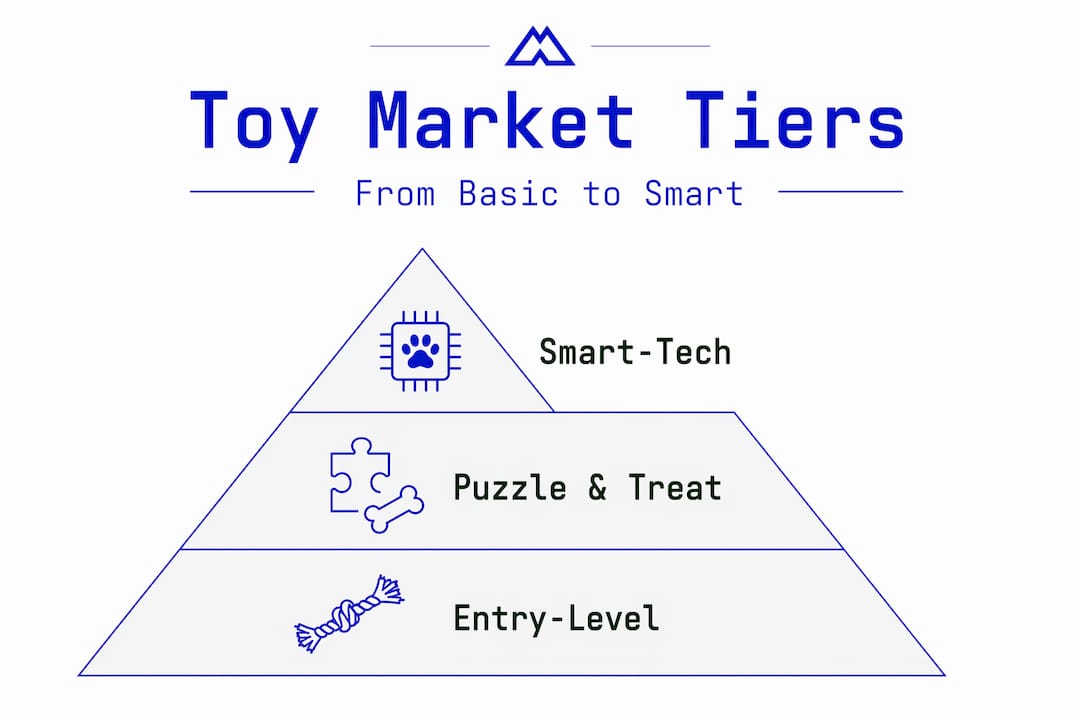
| Tier | Price range | What you get |
|---|---|---|
| Entry-level | $6 to $20 | Basic puzzles, simple treat dispensers, lick mats |
| Mass-market | $20 to $45 | Multi-step puzzles, durable dispensing balls, beginner smart toys |
| Premium | $45 to $90 | Complex multi-action puzzles, heavy-duty materials, enrichment sets |
| Smart-tech | $90 to $250+ | App-controlled toys, auto-rolling balls, interactive laser systems |
Pricing tiers range from $6 to over $250 depending on complexity and technology. Puzzle and treat-dispensing toys hold 55 to 65% of market volume, which reflects where most owners get reliable results. Smart-tech toys hold only 6 to 12% of the market but are growing fast as connected pet care becomes mainstream.
One consideration worth flagging: advanced smart-tech toys require ongoing maintenance, including cleaning and periodic software updates. If you are not prepared to manage that, a well-designed $30 puzzle toy will serve your dog just as well for daily enrichment.
My take on what actually makes these toys work
I have reviewed a lot of interactive toys, and the most consistent pattern I see is this: the toy is not the variable. The owner is.
Dogs get more from a $15 puzzle toy used consistently with brief owner guidance than from a $200 smart device left running in an empty room. Interactive play requires some human involvement, even when the toy is designed for solo use. Sitting near your dog during a puzzle session, praising the solve, and adjusting difficulty over time makes the difference between a toy that works and one that collects dust.
I have also found that people overestimate how long a single toy stays engaging. Novelty fades fast. Matching toy difficulty to your dog’s current skill level and rotating the lineup weekly is the single most effective practice I consistently recommend.
The other thing I want to push back on is the idea that interactive toys are a shortcut to good behavior. They are not. A bored dog with a puzzle is less destructive. But a dog lacking structure, exercise, and training will not be fixed by any toy. Think of these tools as part of a daily enrichment routine, not a standalone solution.
— Thomas
Explore interactive dog toys at Ascenciongear

Ascenciongear carries a range of interactive dog toys built for real engagement, not just shelf appeal. Whether your dog is a methodical puzzle solver or an aggressive chewer who needs something that holds up, there is a match here. The Interactive Octopus Dog Toys 4-Pack is a strong starting point for owners wanting hide-and-seek style mental engagement with squeaky rewards. For durable daily chew play, the Squeaky Crinkle Dog Toy combines sensory stimulation with no-stuffing construction that holds up to heavier use. Ascenciongear also offers bundles and multi-pack sets, which makes rotating toys practical and affordable from day one.
FAQ
What are interactive dog toys, exactly?
Interactive dog toys are designed to engage your dog’s mind by requiring problem-solving actions like sliding panels, rolling dispensers, or hide-and-seek mechanics to earn a treat or reward, making them distinct from passive chew toys.
How often should I use interactive toys with my dog?
Two 15-minute sessions per day produces consistent behavioral improvement. Spacing sessions out and rotating toys weekly sustains engagement better than longer, less frequent play.
Do interactive toys actually reduce destructive behavior?
Yes. Daily puzzle use reduces idle chewing time by nearly 30 minutes and cuts boredom behaviors by around 25%, though they work best alongside regular exercise and training.
What age dogs can use interactive toys?
Most interactive toys work for dogs from puppyhood through senior years. Puppies benefit from simpler, softer designs, while senior dogs benefit from moderate-difficulty puzzles that keep cognitive function active without physical strain.
Are smart-tech interactive toys worth the price?
For most dogs, mid-range puzzle or treat-dispensing toys deliver equal engagement at a fraction of the cost. Smart-tech toys are worth considering for high-energy breeds or dogs who have exhausted standard puzzle options, but keep in mind they require regular cleaning and software upkeep.