

Most dog owners buy the gear and then wing it. They grab a clicker, a bag of treats, and a leash, then wonder why their dog seems confused three weeks in. The problem is rarely the accessories. It is the lack of a structured dog training accessories workflow — a repeatable system for how you prepare, execute, and track each session. Professional trainers call this an operant conditioning protocol, and it is what separates dogs that learn fast from dogs that learn the same thing fifteen times without it sticking. This guide gives you that system, from gear selection to timing mechanics to troubleshooting.
Key Takeaways
| Point | Details |
|---|---|
| Workflow beats gear alone | A structured session routine matters more than which brand of clicker or harness you buy. |
| Marker timing is everything | Mark the behavior within 0.5 seconds and deliver the treat within two seconds to build clear learning. |
| Short sessions work better | Three to five minute training bursts multiple times daily outperform long, irregular sessions for most dogs. |
| Consistency across people | Every person training the dog must use the same cues, markers, and treat delivery process or learning slows down. |
| Records drive improvement | Tracking what you trained and how your dog responded lets you adjust your approach based on real data. |
Your Dog Training Accessories Workflow Setup
Before any session starts, you need the right tools in place. Not every piece of gear matters equally, and knowing why each one fits into the workflow saves you from buying things that collect dust.
Markers: the most underrated tool
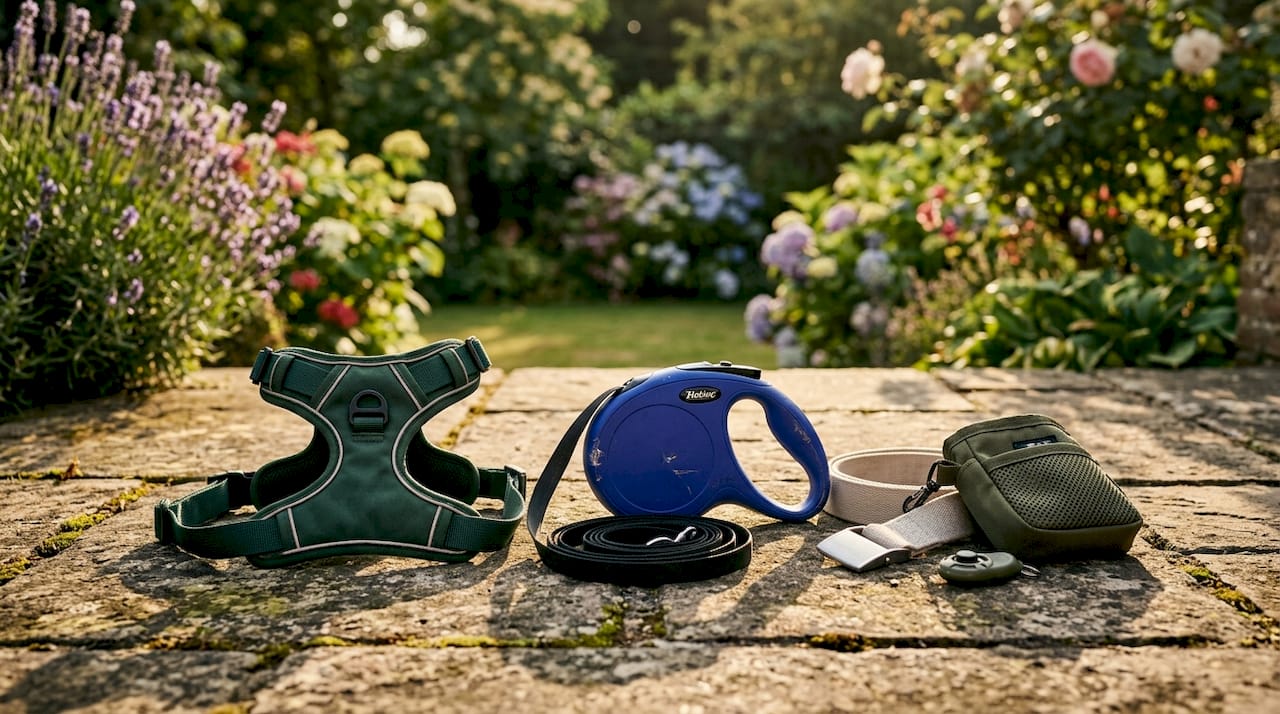
A marker is a precise signal that tells your dog exactly which behavior earned the reward. Clickers are the standard because the sound is consistent and emotionally neutral. Verbal markers like “yes” work too, but you need to say it the same way every time. The research is clear: markers paired with food must always follow the behavior, and repeating the marker while your dog is still figuring things out adds noise that slows learning.
Treat delivery tools
Treat pouches that clip to your waist are non-negotiable. Fumbling with a bag in your pocket creates delays that break the learning chain. Pre-portioned treats in a hip pouch keep everything within reach. The treat size matters too — small, soft pieces your dog can eat in one second are ideal. You want the reward consumed and your dog’s attention back on you within two seconds of the mark.
| Accessory | Role in workflow | Priority |
|---|---|---|
| Clicker or verbal marker | Precise timing signal | High |
| Treat pouch | Fast, fumble-free delivery | High |
| 4-6 ft training leash | Controlled session environment | High |
| Front-clip harness | Reduces pulling, keeps focus | Medium |
| Interactive toy | Alternative reward for play-motivated dogs | Medium |
| Smart collar with app | Guided feedback and session customization | Optional |
Leashes, harnesses, and smart collars
A standard 4-to-6-foot training leash gives you enough control without restricting movement. Front-clip harnesses redirect pulling without causing discomfort, which keeps sessions positive. For owners who want a more guided experience, smart collars with app libraries include stepwise video guides, virtual fence setups, and customizable sound or vibration feedback. These are genuinely useful for advanced workflows, but they require a device familiarization phase before you use them in real training contexts.
Interactive toys as training tools
Toys are not just for play breaks. For dogs with lower food motivation, a quick game of tug or a squeaky plush reward can replace a treat as the reinforcer. The key is keeping the toy out of sight until the moment of reward so it holds value.
Pro Tip: Build a dog training gear checklist and laminate it. Post it where you train. Checking it before every session takes 30 seconds and prevents the most common setup mistakes.
Structuring a session that actually works
Having gear is step one. Using it in a repeatable sequence is where training compounds. Here is a step-by-step session structure that works for both puppies and adult dogs.
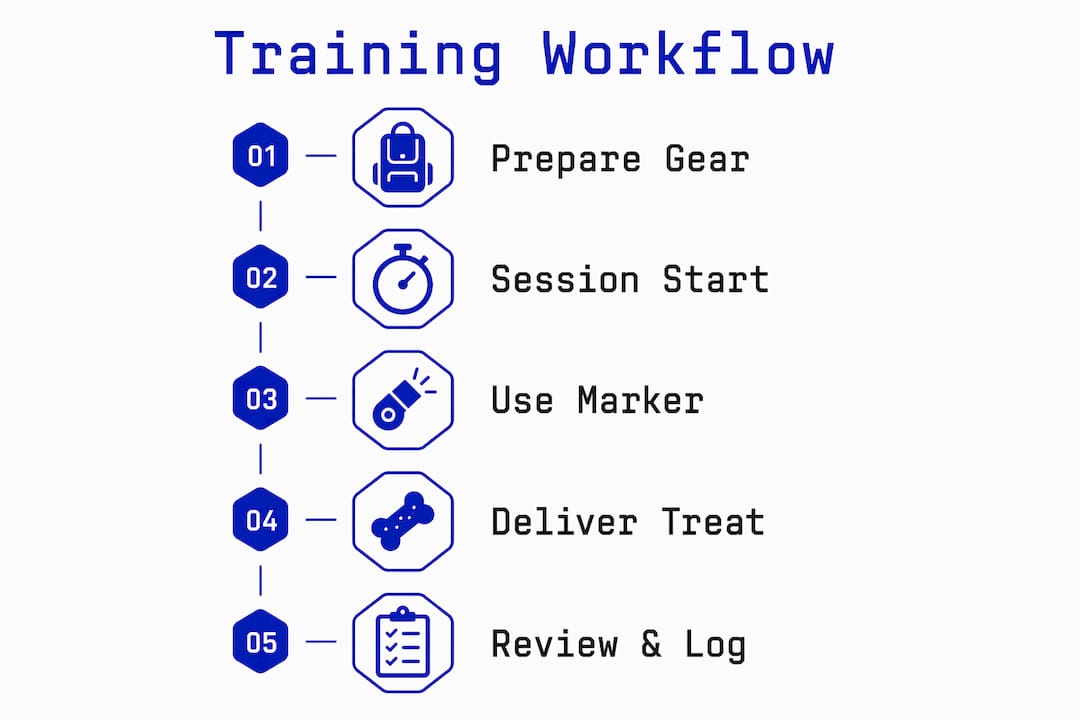
- Charge your marker. If you are starting with a new clicker or a dog that has never worked with one, spend five minutes pairing the click with a treat. Click, treat. Click, treat. No behavior required yet. This loads the marker with meaning before you ask for anything.
- Pre-portion your treats. Measure out the session’s worth of treats into your pouch before you begin. Pre-positioned, accessible treats prevent the fumbling that breaks timing precision and disrupts the session flow.
- Set your session length. For puppies, 3 to 5 minute sessions spread across the day are the right target. Adult dogs can handle 10 to 15 minutes, but only if they stay engaged. The moment focus drops, end the session on a known behavior the dog can succeed at.
- Choose one skill per session. Mixing multiple new behaviors in a single session fragments attention. Pick one thing, work it thoroughly, then end. Reinforcing a known skill at the close of every session builds confidence.
- Log the session. A structured training record does not need to be elaborate. Date, skill worked, number of reps, dog’s response, and what you will adjust next time. That is enough data to make real decisions.
| Session variable | Recommendation |
|---|---|
| Session length (puppy) | 3 to 5 minutes, 3 to 5 times daily |
| Session length (adult) | 10 to 15 minutes, 1 to 2 times daily |
| Treats per session | 20 to 30 small pieces pre-portioned |
| Skills per session | 1 new skill maximum |
| Close of session | Always end on a known, successful behavior |
Pro Tip: Train before meals, not after. A slightly hungry dog is a motivated dog. This single scheduling adjustment can double your session efficiency without changing a single accessory.
Executing the workflow with precision
Setup gets you ready. Execution is where learning actually happens. The difference between a dog that learns quickly and one that seems to plateau is almost always in the timing and delivery details.
The marker must land within about 0.5 seconds of the behavior. That is not a loose guideline. That is the window your dog’s brain uses to connect cause and effect. Miss it, and you are marking whatever your dog did after the behavior you wanted — often a position shift, a look away, or a sit breaking early.
- Mark once. One behavior, one click, one treat. Repeating the marker while your dog is still guessing does not give more information. It creates confusion about what the signal actually means.
- Deliver the treat without extra hand drama. Keep your treat hand still until after the mark, then move smoothly to deliver. If your hand drifts toward the pouch before the click, dogs read that motion as a cue and start anticipating instead of responding.
- Keep body language consistent. Your posture, hand position, and eye contact should be the same each repetition. Dogs are watching everything.
- Rotate reward types. Food is the fastest reinforcer for most dogs, but play and praise sustain motivation over long training arcs. A quick tug session or a verbal burst of praise keeps high-drive dogs from becoming treat-bored.
“The marker is a timestamp, not an encouragement. Treat it with that level of precision and your dog’s learning speed will surprise you.”
Pro Tip: Record a session on your phone once a month. Watching yourself train reveals timing gaps and hand motion inconsistencies that you simply cannot notice while you are in the moment.
Troubleshooting your training routine
Even a well-designed workflow breaks down sometimes. Here is how to diagnose what is going wrong and fix it without starting over.
- Behavior is not sticking. Check your timing first. A delay of even two seconds between the behavior and the mark is enough to teach the wrong thing. Slow down, simplify the criteria, and tighten your click.
- Dog is losing interest mid-session. You are either running sessions too long or the treat value is too low. Switch to a higher-value reward and shorten the session. A dog that walks away is telling you something about motivation, not stubbornness.
- Mixed signals from multiple trainers. Consistency across everyone in the household is the most overlooked variable in multi-person training. Every person working with the dog must use the same verbal cue, the same marker, and the same reward sequence. Write it down and share it.
- Progress has stalled. Pull out your training log. If you have been working the same skill at the same difficulty level for more than a week without movement, the criteria need to change. Break the skill into smaller steps and reinforce the component parts.
- Dog is anxious or distracted. Your training environment is too hard. Move to a quieter space, reduce the distance or duration requirements, and rebuild success before adding distractions back in.
Pro Tip: Find your dog’s three favorite treats and rank them by value. Use low-value treats for easy behaviors in familiar settings, and reserve the top-tier treat for new or difficult behaviors.
Results you can expect from a structured approach
When you run a consistent dog training accessories workflow, the changes are measurable and they happen faster than most owners expect.
- Faster learning: clear markers and immediate reinforcement reduce the number of repetitions a dog needs to understand a new behavior.
- Less frustration for both of you: a session structure means fewer moments where neither the dog nor the owner knows what comes next.
- Stronger communication: dogs trained with marker precision develop an ability to offer behaviors and read handler cues that loosely trained dogs rarely develop.
- Adaptability: a workflow built around short, structured sessions transfers across environments, skill levels, and life stages.
- Lasting motivation: rotating between food, play, and praise as reinforcers prevents the reward inflation that causes dogs to stop working for treats they once loved.
What I have learned about workflow that most guides miss
I have watched a lot of dog owners buy excellent gear and still struggle. The clicker is top-rated, the treats are high-value, the harness fits perfectly. And the training still stalls. After seeing this pattern enough times, the cause is almost always the same: people treat the accessories as the solution instead of treating the system as the solution.
The brand of clicker does not matter much. What matters is whether everyone in the house clicks at the same moment in the behavior, stores treats in the same location, and ends sessions the same way. One person adding an extra click “for encouragement” or delivering the treat two seconds after everyone else has been is enough to slow learning noticeably.
My other consistent observation: owners who start with a written workflow, even a simple one, see better results than those who rely on memory and habit. It sounds like overkill for training a dog to sit. But that written process is what you reference when something stops working, and it is what you hand to a family member, a dog sitter, or a trainer who steps in.
The accessories matter, but they are inputs to the system. The system is what produces the outcome.
— Thomas
How Ascenciongear supports your training sessions
Ascenciongear carries the training accessories that fit directly into the workflow you have built here. The Dog Treats Bundle with three flavors gives you beef and chicken options in one order, so you can rotate treat value across sessions without separate purchases. For play-motivated dogs that respond better to toy rewards, the Interactive Octopus Puzzle Set delivers mental stimulation and reward value in one durable package. Ascenciongear also stocks training toys for puppies if you are starting young. Every product ships across the US and is selected with real training utility in mind, not just novelty.
FAQ
What is a dog training accessories workflow?
A dog training accessories workflow is a structured system for preparing, executing, and logging training sessions using specific tools like markers, treat pouches, and leashes. It ensures consistency and timing precision across every session.
How long should a dog training session be?
For puppies, 3 to 5 minute sessions repeated three to five times daily are recommended. Adult dogs can handle 10 to 15 minutes per session, provided they stay engaged throughout.
Why does marker timing matter so much?
The marker must land within about 0.5 seconds of the behavior so your dog connects the correct action to the reward. Missing that window means you may be reinforcing a different behavior entirely.
What treats work best for training sessions?
Small, soft treats your dog can chew and swallow in one second are the best choice for training. High-value options like real beef or chicken hold motivation better than dry biscuits, especially for new or difficult behaviors.
Can multiple people train the same dog?
Yes, but everyone must use the same cues, the same marker, and the same delivery sequence. Inconsistency across handlers is one of the most common reasons training stalls in family households.