

Most dog owners reach for a treat without thinking twice. But the benefits of dog treats go well beyond a quick reward. The right treat can reinforce training, support joint health, improve digestion, and strengthen the bond between you and your dog. The wrong one can fracture a tooth or trigger a vet emergency. Knowing the difference is not complicated once you understand what to look for. This article breaks down every major benefit category so you can make choices that actually serve your dog.
Table of Contents
- Key takeaways
- 1. What makes a dog treat actually healthy and safe
- 2. Functional treats and their targeted health benefits
- 3. Using high-value treats to sharpen training results
- 4. Homemade dog treats vs. store-bought options
- 5. Treat types to use and treat types to avoid
- My take on choosing dog treats the right way
- Ready to put these benefits to work
- FAQ
Key takeaways
| Point | Details |
|---|---|
| Treats support training | High-value treats trigger dopamine release, making dogs faster to learn and more motivated. |
| Functional treats add nutrition | Ingredients like omega-3s, glucosamine, and prebiotics deliver targeted health benefits beyond basic snacks. |
| Hard treats carry real risk | 26% of dogs suffer fractured teeth from excessively hard treats, and some popular chews cause life-threatening blockages. |
| The 10% rule matters | Treats should not exceed 10% of your dog’s daily calories to prevent weight gain and digestive problems. |
| Homemade treats offer control | Making treats at home gives you full ingredient transparency, but requires attention to balance and safe food choices. |
1. What makes a dog treat actually healthy and safe
Before getting into specific benefits, you need a reliable way to evaluate any treat you pick up. Not all treats are created equal, and some popular options are genuinely dangerous.
Start with hardness. A treat that cannot be dented with your fingernail is too hard for safe chewing and can fracture your dog’s teeth. That rules out many antlers, hard nylon bones, and certain pressed chews that are marketed as durable but are actually risky.
Next, read the ingredient list. Watch for these specific red flags:
- Xylitol: a sweetener toxic to dogs even in small amounts
- BHA and BHT: synthetic preservatives linked to health concerns
- Excessive sodium: can stress the kidneys over time
- Propylene glycol: sometimes used in soft treats as a humectant
Size and chewing habits matter too. A treat sized for a large breed is a choking hazard for a small dog. A soft treat given to a power chewer disappears in seconds and provides no enrichment value. Match the treat to the dog.
Pro Tip: Always check for the AAFCO statement or a veterinarian-formulated label. It does not guarantee perfection, but it does mean the product met a minimum standard of nutritional review.
Finally, watch the calorie count. Overfeeding treats causes digestive upset, weight gain, and joint stress. Treats should stay at or below 10% of your dog’s total daily calories.
2. Functional treats and their targeted health benefits
Functional treats are one of the most underused tools in a dog owner’s routine. These are treats formulated with specific ingredients that support health goals, not just taste preferences.
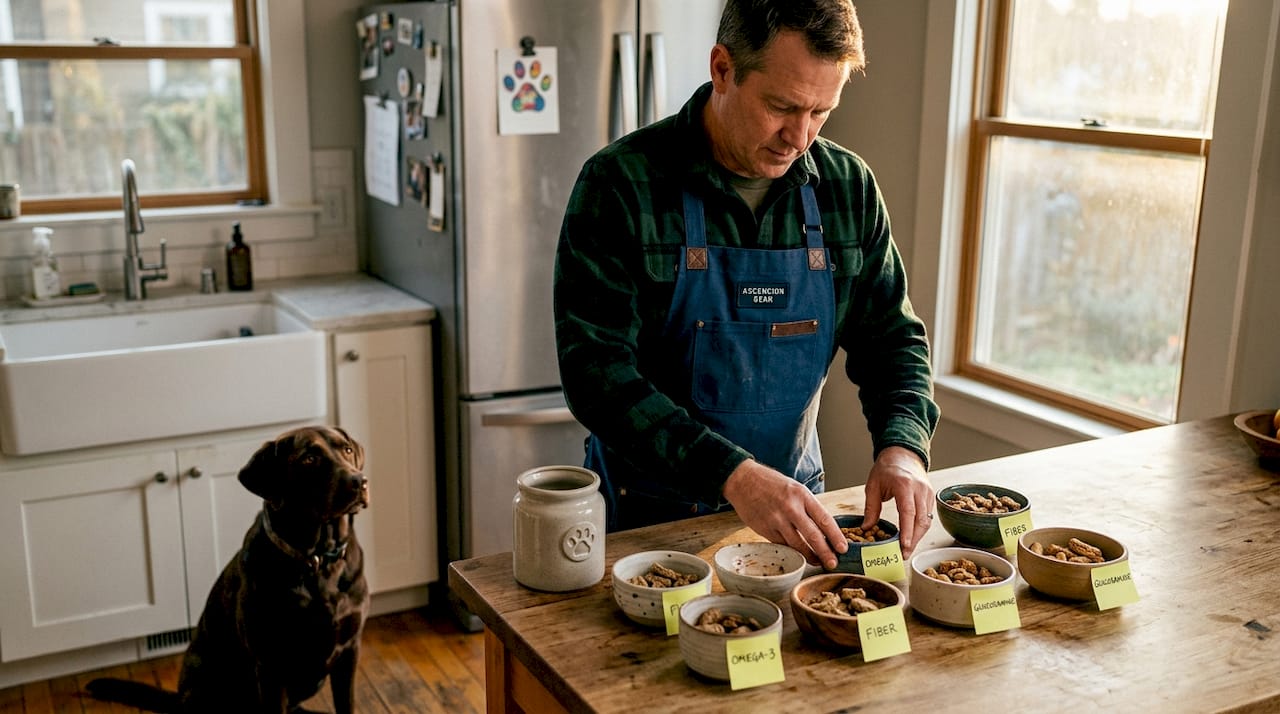
Omega-3s, prebiotic fibers, and glucosamine are three of the most studied functional ingredients. Each one targets a different system. Here is how they break down:
| Ingredient | Primary benefit | Best for |
|---|---|---|
| Omega-3 fatty acids | Skin, coat, and inflammation | Dogs with dry skin or joint issues |
| Glucosamine | Joint cartilage support | Senior dogs or large breeds |
| Prebiotic fiber | Gut microbiome balance | Dogs with sensitive stomachs |
| Taurine and antioxidants | Cardiovascular support | Aging dogs or heart-prone breeds |
| Beta-glucans (yeast fermentate) | Immune and digestive health | Dogs recovering from illness |
The taurine and omega-3 combination specifically supports heart muscle function and helps manage inflammatory responses. For breeds predisposed to dilated cardiomyopathy, this is worth taking seriously.
One important clarification: functional treats complement a balanced diet. They do not replace it. If your dog eats a nutritionally complete food, functional treats act as a top-up, not a correction. For senior dogs especially, a well-chosen functional treat can address multiple age-related concerns at once.
Pro Tip: Look for treats with specific milligram amounts of active ingredients listed on the label. Vague claims like “contains omega-3s” without a dose mean the amount may be too low to matter.
Treats like Plato Thinkers Chicken Dog Treats are formulated with EPA and DHA to support brain and cognitive health, which makes them a practical choice for both aging dogs and puppies in development.
3. Using high-value treats to sharpen training results
This is where treat selection gets strategic. Not every treat deserves equal status in your training toolkit. The benefits of training treats come from understanding treat value and using it deliberately.
A high-value treat has four qualities: strong aroma, novel flavor, soft texture for fast consumption, and something your dog does not get every day. Real chicken, freeze-dried liver, and soft cheese-based treats typically meet all four criteria. Dry kibble does not.
Here is why this matters neurologically. High-value treats trigger dopamine release in a dog’s brain, reinforcing the behavior immediately before the reward. The stronger the reward, the stronger the neural connection. This is not a training philosophy. It is brain chemistry.
How to use high-value treats effectively:
- Reserve them for difficult work. Recall in a park full of distractions, loose-leash walking past other dogs, or first-time exposure to loud noises all qualify. Save high-value treats for hard behaviors and use lower-value treats for behaviors your dog already knows well.
- Break them into tiny pieces. A treat the size of a pea delivers the same dopamine hit as a large chunk. Smaller pieces let you reward more frequently without blowing your dog’s calorie budget.
- Rotate flavors regularly. Novelty drives motivation. If your dog gets freeze-dried salmon every session for three weeks, it loses its edge. Switch between chicken, beef, and fish to keep engagement high.
- Deliver immediately. The reward window for reinforcement is roughly two seconds. A delayed treat teaches your dog to associate the reward with whatever they were doing when they got it, not the behavior you intended to reinforce.
Pro Tip: Keep a small pouch of high-value treats separate from everyday treats. The physical ritual of reaching for the special pouch can itself become a cue that signals your dog that serious learning is happening.
For soft, reliable training treats, Fromm Tenderollies are a good option. They are small, soft, and easy to break apart mid-session.
4. Homemade dog treats vs. store-bought options
Both approaches have real advantages. The question is which one fits your dog’s needs and your schedule.
Homemade treat advantages:
- Full ingredient transparency with no hidden additives
- Customizable for dogs with allergies or specific dietary restrictions
- Can use ingredients your dog loves for maximum treat value
- Bonding experience that some dogs genuinely respond to
Store-bought treat advantages:
- Functional formulations with precise, tested dosing of active ingredients
- Consistent calorie counts for easier portion management
- AAFCO-reviewed formulations when labeled appropriately
- Convenience for busy owners
The homemade route carries one underappreciated risk: many human foods are toxic to dogs. Grapes, raisins, onions, macadamia nuts, and anything with xylitol must never appear in a homemade treat. Plain cooked chicken, sweet potato, pumpkin, and oats are safe starting points.
| Factor | Homemade | Store-bought |
|---|---|---|
| Ingredient control | High | Variable |
| Functional ingredient accuracy | Low | High (if labeled) |
| Cost | Low to medium | Medium to high |
| Convenience | Low | High |
| Customization | High | Low |
The best approach for most owners is a combination. Use high-quality store-bought treats for training and functional benefits, and make simple homemade treats occasionally for variety and bonding. Just remember the 10% daily calorie rule applies regardless of where the treat came from.
5. Treat types to use and treat types to avoid
The natural dog treat benefits conversation gets complicated fast when you look at what is actually on pet store shelves. Many popular chews are marketed as natural, long-lasting, and beneficial. Some are genuinely risky.
26% of dogs experience fractured teeth from excessively hard treats. Rawhide and Himalayan yak chews are specifically linked to intestinal blockages requiring emergency surgery. Smoked bones lose their flexibility during processing, becoming brittle in ways that cause dangerous splintering inside a dog’s mouth or stomach.
Treats to approach with caution or avoid:
- Rawhide chews (blockage risk, often treated with chemicals)
- Smoked or cooked bones of any kind (splintering and GI damage)
- Himalayan yak chews for strong chewers (fracture risk when reduced to a small stub)
- Jerky treats from certain manufacturers (linked to kidney disease in a small number of cases)
- Excessively hard pressed chews that pass the fingernail test
Safer alternatives that still satisfy chewing needs:
- Single-ingredient freeze-dried treats (chicken, liver, salmon)
- Soft functional treats sized appropriately for the dog
- Rubber treat-dispensing toys that redirect chewing to a safe outlet
- Bully sticks (in moderation and with supervision)
For dogs that chew destructively, pairing a safe treat with a durable chew toy solves two problems at once. It satisfies the chewing drive without putting a hard, risky object in your dog’s mouth.
One thing veterinarians consistently flag: “natural” is a marketing term, not a safety standard. Some of the most dangerous popular treats carry premium natural labeling. Focus on specific ingredients and treat hardness, not the front of the package.
My take on choosing dog treats the right way
I’ve spent years watching dog owners make the same two mistakes. The first is treating “natural” as a synonym for safe. I’ve seen expensive premium chews cause fractures that cost more to fix than a year’s worth of quality food. The marketing works, and it puts dogs in danger.
The second mistake is using treats randomly instead of strategically. Most dogs are under-rewarded during training and over-rewarded during couch time. That pattern gets the calorie balance wrong and leaves training results on the table.
What I’ve found actually works is treating your treat selection like a toolkit. You pick the right tool for the job. A soft, smelly, high-value treat for training a difficult recall. A functional chew for joint support during a senior dog’s afternoon rest. A simple homemade sweet potato bite for bonding without adding meaningless calories.
The other thing I’ve learned: positive reinforcement with treats builds trust and confidence in ways that punishment never does. Dogs trained with well-chosen treats are calmer, more responsive, and frankly more enjoyable to be around. That outcome alone makes the effort of choosing well worth it.
— Thomas
Ready to put these benefits to work
If you want a practical starting point without the guesswork, Ascenciongear has you covered. The Dog Treats Bundle with 3 flavors gives you variety across beef and chicken options, which makes rotating flavors during training sessions easy and convenient.

For owners focused on cognitive and physical health support, the Plato Thinkers Chicken treats with EPA and DHA fit directly into the functional treat strategy covered in this article. And if you want to pair treat time with enrichment, Ascenciongear’s interactive treat toy selection gives your dog a mentally engaging outlet that extends the value of every treat you give.
FAQ
What are the main benefits of dog treats?
Dog treats support training through positive reinforcement, provide functional nutrition through targeted ingredients like omega-3s and glucosamine, and strengthen the bond between owner and dog. Choosing the right treat for the right situation determines how much benefit you actually get.
Are dog treats good for dogs every day?
Yes, when portioned correctly. Treats should not exceed 10% of a dog’s daily calorie intake. Exceeding that amount consistently leads to weight gain, digestive issues, and joint stress over time.
What treats work best for training?
Soft, small, high-aroma treats with novel flavors work best for training. These treats trigger a stronger dopamine response in the dog’s brain, which reinforces learned behaviors faster and more reliably than dry or familiar treats.
Are homemade dog treats safer than store-bought?
Homemade treats offer better ingredient control but require careful attention to avoid toxic foods like grapes, onions, and xylitol. Store-bought treats with clear ingredient lists and functional formulations can be equally safe and more nutritionally precise.
Which dog treats should I avoid?
Avoid rawhide, smoked bones, and excessively hard chews that cannot be dented with a fingernail. These are linked to tooth fractures, intestinal blockages, and emergency vet visits. Single-ingredient soft treats and appropriately sized functional chews are safer alternatives.