

Most new puppy owners think their dog is acting out when the chewing starts. Shoes disappear. Furniture gets gnawed. But what is puppy teething, really? It’s a completely natural biological process where your puppy loses 28 baby teeth and grows 42 permanent adult teeth. That’s not misbehavior. That’s development. Understanding what’s actually happening in your puppy’s mouth, and when, changes everything about how you respond. This guide covers every stage, every symptom, and exactly what you can do to help.
Table of Contents
- Key takeaways
- What is puppy teething: stages and timeline
- Recognizing puppy teething signs
- How to help teething puppies safely
- Common teething problems to watch
- After teething: maintaining dental health
- My take on what owners often miss
- Support your puppy through teething with the right tools
- FAQ
Key takeaways
| Point | Details |
|---|---|
| Teething is a two-phase process | Baby teeth erupt at 3-8 weeks; permanent teeth replace them between 3-7 months. |
| Chewing is self-soothing | Increased chewing is a normal pain response, not a behavior problem. |
| Some symptoms need a vet | Excessive bleeding, foul odor, or retained teeth after 7 months require professional evaluation. |
| Ice cubes can cause damage | Use frozen washcloths or soft rubber toys instead to protect developing teeth. |
| Early mouth handling prevents problems | Weekly checks from 4-7 months help catch retained teeth and dental issues before they worsen. |
What is puppy teething: stages and timeline
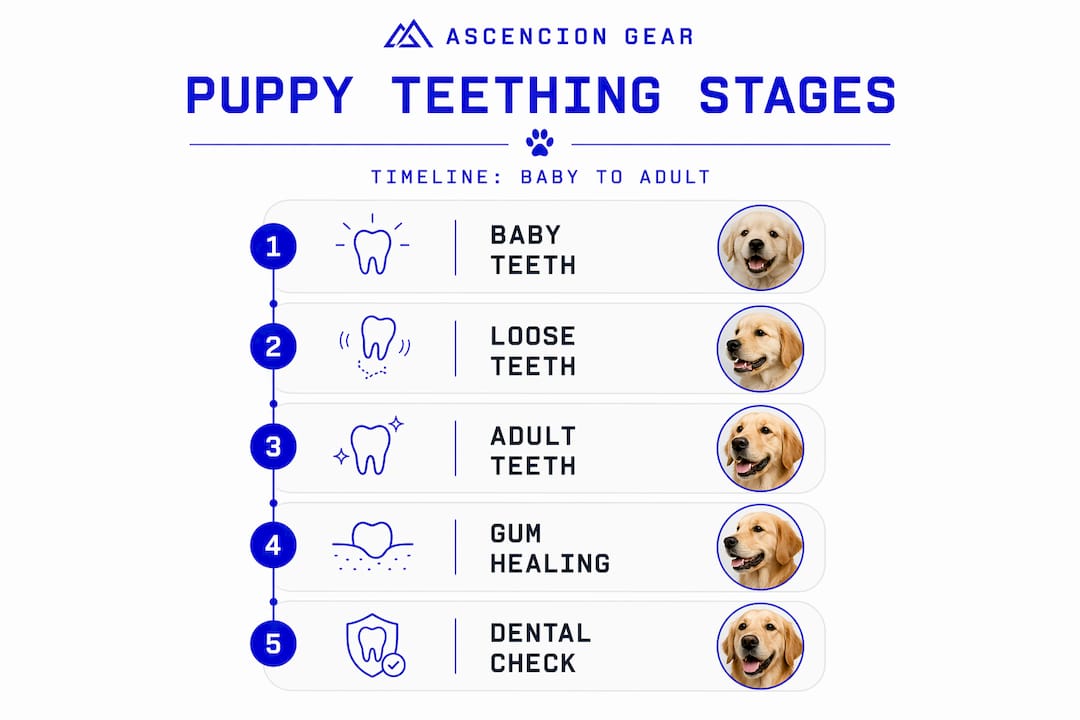
Puppy teething is a two-phase process: baby teeth come in first, then adult teeth push through and replace them. Knowing the timeline helps you understand what’s normal and stops a lot of unnecessary worry.
Phase one happens before most owners even bring their puppy home. Baby teeth start erupting between 3 and 8 weeks of age. By the time your puppy is weaned, all 28 deciduous teeth are usually in place.
Phase two is where things get noticeable. Between 3 and 7 months, those baby teeth start loosening and falling out as adult teeth push up from below. The process typically completes by 6 to 7 months, leaving your dog with a full set of 42 permanent teeth.

Here’s a breakdown of what to expect at each stage:
| Stage | Age range | What’s happening | Teeth involved |
|---|---|---|---|
| Baby teeth eruption | 3-8 weeks | First teeth break through gums | 28 deciduous teeth |
| Baby teeth loosening | 3-4 months | Roots dissolve, teeth become wobbly | Incisors first |
| Active shedding | 4-6 months | Baby teeth fall out, adult teeth erupt | Canines and premolars |
| Adult teeth complete | 6-7 months | Full permanent set in place | 42 adult teeth |
Small breeds like Chihuahuas and Yorkshire Terriers tend to take longer, and they’re also more prone to retained baby teeth. Large breeds often move through the stages faster. Either way, once you see loose teeth or find small teeth on the floor, your puppy is right on track.
A note on swallowed teeth: swallowing baby teeth is harmless and happens more often than owners expect. Puppies swallow them during play or eating, and the teeth pass without issue. You don’t need to collect them.
Recognizing puppy teething signs
Spotting the signs early makes management much easier. Some are obvious. Others get missed because owners assume their puppy is just “being bad.”
Common signs your puppy is teething:
- Increased chewing on everything, including furniture, shoes, and hands
- Drooling more than usual
- Red or mildly swollen gums around emerging teeth
- Loose or wobbly baby teeth
- Finding small white teeth around the house
- Slight blood spots on chew toys or in saliva
- Irritability or pulling away when the mouth area is touched
- Reduced appetite when gum soreness peaks
Mild gum redness and a little blood on a chew toy are both normal during active shedding. The gums are under pressure as adult teeth push through, so some spotting is expected.
Warning signs that need a vet visit:
- Excessive bleeding, severe swelling, or foul odor from the mouth
- Difficulty eating or dropping food repeatedly
- A baby tooth and adult tooth visibly occupying the same socket (double teeth)
- Baby teeth still present after 7 months of age
- Any sign of infection such as pus or extreme tenderness
How to check your puppy’s mouth: Sit your puppy on your lap and gently lift the lips while talking calmly. Look at the gum line, check for wobbly teeth, and note any redness. Do this weekly from around 4 months onward. The more you practice, the more comfortable your puppy becomes with mouth handling, which also pays off during future vet visits and teeth brushing.
Pro Tip: Keep a simple weekly log noting the date, any teeth that look loose or have fallen out, and any gum changes. This gives your vet useful information and helps you track what’s normal for your specific puppy.
How to help teething puppies safely
Chewing is a natural self-soothing behavior that relieves pressure on sore gums. Your job isn’t to stop it. Your job is to direct it toward safe objects and make those objects as comfortable as possible for your puppy.
Follow these steps daily during the teething period:
- Offer a soft rubber chew toy morning and evening. Soft rubber provides resistance without the hardness that can fracture fragile new teeth. The 6-pack soft TPR rubber toys from Ascenciongear are sized and textured specifically for teething puppies.
- Chill a clean washcloth and let your puppy chew it. Frozen damp washcloths provide cold therapy that reduces gum inflammation safely. Wet a small cloth, fold it, and freeze it for 30 minutes before offering it.
- Redirect immediately when chewing begins on the wrong item. Remove the item calmly, say “no,” and replace it with an approved toy. Reward when your puppy engages with the correct object.
- Rotate toys to keep things interesting. Puppies lose interest quickly. Offering the same toy every session leads to boredom and a return to furniture. Rotate between rubber toys, soft plush toys, and chilled options.
- Do a quick gum check after play sessions. Look for unusual swelling or redness that wasn’t there before. This takes less than a minute and helps you catch problems early.
- Remove hard objects from reach. Antlers, hard nylon bones, and ice cubes are popular recommendations you should skip. Ice cubes risk fracturing fragile new teeth that haven’t fully hardened yet.
One critical safety note: human medications like ibuprofen and acetaminophen are toxic to dogs. Never give your puppy any human pain reliever, even a small dose. If you feel your puppy’s discomfort is beyond what toys and cold therapy can manage, call your vet for canine-safe options.
Pro Tip: If your puppy refuses all chew toys, try rubbing a tiny amount of low-sodium chicken broth on the surface. Most puppies immediately show more interest, and it turns an ignored toy into a preferred one.
Common teething problems to watch
Most puppies move through teething without any serious complications. But some problems do occur, and catching them early makes a significant difference.
Retained deciduous teeth are the most common complication. This happens when a baby tooth doesn’t fall out on schedule as the adult tooth erupts. Both teeth end up occupying the same space, which causes crowding, forces the adult tooth into an abnormal position, and creates tight spaces where plaque accumulates rapidly.
Retained baby teeth are especially common in small breeds like Maltese, Toy Poodles, and Dachshunds. A retained tooth typically needs to be extracted by a vet. The longer it stays in place, the higher the risk of bite misalignment and early periodontal disease.
The table below summarizes what’s normal versus what signals a problem:
| Sign | Normal | Abnormal | Action |
|---|---|---|---|
| Gum color | Pink, mildly red | Bright red, purple, or pale | Vet visit |
| Bleeding | Occasional spotting on toys | Heavy or persistent bleeding | Vet visit |
| Tooth looseness | Wobbly at 3-6 months | Still firm baby teeth after 7 months | Vet extraction |
| Double teeth | Not expected | Two teeth in same socket | Vet extraction |
| Mouth odor | Mild | Foul or persistent bad breath | Vet evaluation |
| Eating behavior | Slightly slower | Refusing food, dropping kibble | Vet visit |
Regular veterinary dental exams during puppy visits provide the clearest opportunity to catch retained teeth before they cause damage. Your vet will check the full mouth at each wellness visit, but you should also mention anything unusual you’ve noticed during your weekly checks at home.
Nutrition also plays a role. Puppies eating a balanced, age-appropriate diet tend to have better tooth and bone development overall. If you’re unsure about your puppy’s diet during teething, ask your vet at the next visit.
After teething: maintaining dental health
Once teething wraps up around 6 to 7 months, your puppy has all 42 adult teeth. The teething phase is over, but your work isn’t. Dental disease is often “silent” in dogs, developing without obvious pain until it’s advanced. Most dogs have some level of dental disease by 3.5 years of age. Starting habits now is the most effective prevention you have.
Post-teething dental care checklist:
- Begin brushing with a dog-safe toothpaste and a soft finger brush. Start with short sessions and build up the time gradually.
- Continue weekly mouth checks even after teething ends. Look for tartar buildup, swollen gums, or cracked teeth.
- Offer squeaky plush toys that keep your dog mentally engaged and satisfy the urge to chew without stressing teeth.
- Feed a high-quality diet and avoid sticky treats that cling to tooth surfaces.
- Schedule your puppy’s first full dental checkup at the 6-month vet visit if your vet doesn’t schedule one automatically.
- Avoid hard chews like real bones, antlers, or nylon toys marked for “aggressive chewers” that can crack adult molars.
Chewing doesn’t stop after teething. It becomes part of your dog’s normal behavior pattern. Managing it with the right toys protects both your furniture and your dog’s teeth for years to come.
My take on what owners often miss
I’ve seen a pattern with new puppy owners. They come in frustrated, convinced their puppy has a behavior problem, when what they’re really dealing with is a dog in physical discomfort with no way to communicate it. Teething behavior gets misread as defiance, and that leads to frustration on both sides.
What actually changed my perspective was realizing how silent dental pain is in dogs. They don’t yelp and point at their mouths. They just chew more, get slightly snappy, or go off their food. Once I started treating those signals as information rather than problems to correct, everything became much easier to manage.
The mistake I see most often is using toys that are too hard. People assume durable means better during teething. It doesn’t. A toy that a puppy can make a slight dent in is far more appropriate than something that doesn’t flex at all. Your puppy’s new adult teeth are still mineralizing. Hard resistance at this stage does real damage.
The other thing worth saying plainly: don’t wait too long to call your vet. If a baby tooth is still in place at 7 months, or if you see two teeth side by side in the same spot, that tooth needs to come out. I’ve talked to owners who waited months because they thought it would resolve on its own. It doesn’t, and the longer it waits, the more crowding and plaque buildup sets in.
Start mouth handling early, use soft appropriate toys, and check in with your vet regularly. That combination handles the vast majority of teething problems before they become real issues.
— Thomas
Support your puppy through teething with the right tools

The right chew toy makes a measurable difference during teething. At Ascenciongear, the no-stuffing crinkle chew toy is one of the most popular picks for teething puppies. It combines a crinkle texture with a soft squeaky design, giving your puppy the stimulation they need without any hard material that could stress emerging adult teeth. There’s no stuffing to ingest, and the squeaky feedback keeps puppies coming back to it instead of your furniture. Paired with a cozy dog bed and a few rotating toy options, you’ve got everything your puppy needs to get through teething comfortably. Browse the full range of puppy-ready products at Ascenciongear and ship anywhere in the US.
FAQ
What is puppy teething and when does it start?
Puppy teething is the process where baby teeth fall out and adult teeth emerge. It starts around 3 months of age when permanent teeth begin replacing the 28 baby teeth your puppy was born with.
What are the most common puppy teething signs?
The most common signs are increased chewing, drooling, mild gum redness, loose teeth, and finding small teeth around the house. Slight blood spotting on toys is also normal during active shedding.
How do I help a teething puppy with sore gums?
Offer soft rubber chew toys or a frozen damp washcloth to soothe sore gums. Avoid ice cubes, which can fracture developing adult teeth, and never give human pain medications.
When do I need to call a vet about teething?
Call your vet if you see foul breath, heavy bleeding, difficulty eating, or a baby tooth still in place after 7 months. These signs may indicate infection or a retained tooth needing extraction.
How many teeth does a puppy have after teething?
After the teething process completes at around 6 to 7 months, puppies have 42 permanent adult teeth, replacing the original 28 baby teeth.
Recommended
- Why dogs chew destructively: causes, solutions, and best toys – Ascencion Gear
- Puppy Teething Toys 6-Pack | Soft TPR Rubber Chew Toys for Small Dogs – Ascencion Gear
- Best training toys for puppies: Boost learning and play – Ascencion Gear
- How to introduce new dog toys safely and effectively – Ascencion Gear