

Bringing a new puppy home ranks among the most exciting things you can do. It also happens to be one of the most disorganizing ones. Between food, crates, vet visits, training pads, and toys, most new owners end up buying the wrong things in the wrong order. This new puppy checklist fixes that. It organizes everything by priority, starting with what you need before Day 1, then walking through health prep, training basics, and how to set routines that actually stick. Follow the sequence and you will skip most of the first-week chaos.
Table of Contents
- Key takeaways
- 1. How to choose puppy essentials: the priority framework
- 2. Home base essentials checklist
- 3. Vet care and first-visit preparation
- 4. Early routines and the first 48 hours
- 5. Toy and enrichment selection
- 6. Comparing key puppy supply categories
- My honest take on the first-time puppy owner experience
- Get your puppy started right with Ascenciongear
- FAQ
Key takeaways
| Point | Details |
|---|---|
| Safety comes before comfort | Set up containment and puppy-proofing before the puppy arrives, not after. |
| Crate size directly affects training | A crate that is too large slows housetraining; use a divider to size it correctly. |
| Enzymatic cleaner is non-negotiable | Standard cleaners leave odor molecules behind; only enzymatic formulas prevent re-soiling. |
| First vet visit within 72 hours | Schedule it before pickup so the appointment is ready the moment the puppy comes home. |
| The 3-3-3 rule sets realistic expectations | Puppies take 3 days to decompress, 3 weeks to learn routines, and 3 months to fully settle in. |
1. How to choose puppy essentials: the priority framework
Not every item on a puppy supplies list carries equal weight. Some things must exist before the puppy walks through the door. Others can wait a week. Organizing purchases by urgency prevents the common mistake of buying 12 toys on Day 1 while forgetting enzymatic cleaner.
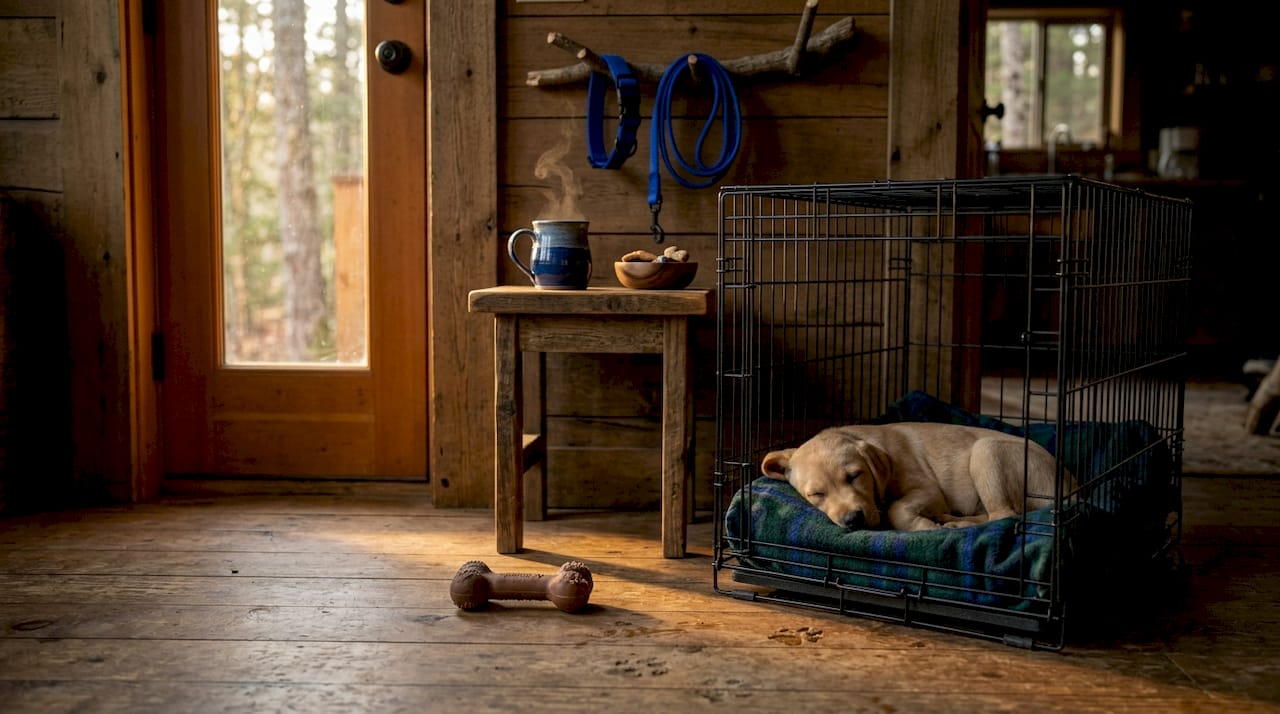
Think in three tiers. Safety comes first: containment, ID, and home security. Comfort comes second: bedding, food, and water. Connection comes third: toys, training tools, and enrichment. This sequence mirrors what a puppy actually needs in their first hours.
- Safety tier (before Day 1): Crate with divider, collar with ID tag, leash, puppy gates, cabinet locks
- Comfort tier (Day 1): AAFCO-certified puppy food, stainless steel bowls, bedding, enzymatic cleaner, training pads
- Connection tier (Week 1 and beyond): Chew toys, puzzle feeders, training treats, grooming starter tools
Pro Tip: Size the crate to the puppy’s current body length, not their adult size. Oversized crates hinder housetraining because puppies will use the extra space as a bathroom. A divider panel lets you adjust the space as they grow.
Meeting safety and comfort needs first reduces stress for both the puppy and you. When those basics are covered, your puppy can settle faster and training gains traction sooner.
2. Home base essentials checklist
The items below are what you need before Day 1 to avoid first-day chaos. Missing even one of these creates problems that are hard to fix mid-scramble.
- Crate with adjustable divider. A divider panel prevents giving puppies too much space and keeps housetraining on track.
- Soft crate pad or blanket. Familiar scent from the breeder helps. Ask for a cloth that smells like the litter.
- Collar and ID tag. Engrave your phone number before pickup day, not after.
- 4-foot leash. Skip retractable leashes for now. Short, fixed leashes give you more control during early walks.
- Puppy-proofing supplies. Baby gates, outlet covers, cabinet locks, and cord concealers.
- Training pads. Place near the door or in a designated bathroom spot. High-absorbency XL training pads reduce overflow accidents with larger breeds.
- Enzymatic cleaner. Buy two bottles. You will use more than you expect.
- AAFCO-certified puppy food. Check that the bag explicitly states “complete and balanced for puppies” per AAFCO guidelines.
- Two food bowls. Stainless steel resists bacteria better than plastic and does not scratch over time.
Pro Tip: Durable rubber chew toys belong in your Day 1 kit. Teething puppies need something appropriate to chew, and giving them the right option immediately prevents furniture and shoe damage from becoming a habit.
3. Vet care and first-visit preparation
Schedule your puppy’s first vet visit within the first week, ideally within 72 hours of bringing them home. Most new owners wait until something goes wrong. Booking the appointment in advance puts you ahead of that situation.
Here is what to bring to that first visit:
- Vaccination records from the breeder or rescue. Even partial records help the vet map the remaining shot schedule.
- A fresh stool sample. Collected the morning of the visit if possible. A fresh stool sample enables precise parasite screening, which is one of the most common early health issues in puppies.
- Current food brand and feeding schedule. Veterinarians use this to tailor nutritional advice and GI health guidance. Bringing feeding details improves exam efficiency significantly.
- A list of your questions. Topics worth covering: flea and tick prevention, deworming, spay or neuter timing, and socialization windows.
The vet will conduct a full physical exam, check for parasites, and confirm or start the vaccine schedule. This visit also opens the conversation about spay/neuter timing, which varies by breed and size. Large breeds often benefit from waiting longer than small breeds before the procedure. Ask your vet directly rather than relying on general rules.
4. Early routines and the first 48 hours
The first 48 hours should focus on three things only: potty routine, crate introduction, and sleep location. That is the whole agenda. Visitors, new toys, neighborhood walks, and anything stimulating should wait.
The 3-3-3 rule gives you a clear timeline for what to expect:
- 3 days: The puppy is in shock and decompress mode. They may not eat, play, or behave like themselves.
- 3 weeks: Routine clicks. They learn the house rules, sleep schedule, and bathroom expectations.
- 3 months: Full adjustment is complete. Their true personality shows up.
Understanding this timeline prevents overreaction in the early days. A puppy who hides in the crate and refuses food on Day 1 is not sick. They are overwhelmed. Consistency and calm are the right responses.
“Early socialization should be paced, with some encounters deliberately skipped, to avoid overwhelming a puppy during the critical adjustment window.” Source: 4Knines
Pro Tip: Put the crate in your bedroom for the first two weeks. Proximity to your scent reduces nighttime whining by a wide margin. Once the puppy sleeps through the night consistently, you can move the crate to its permanent location.
For potty training, the schedule is simple. Take the puppy outside every 45 to 60 minutes, immediately after eating, and right after waking from naps. When accidents happen inside, clean with enzymatic cleaner only. Enzymatic cleaner breaks down odor molecules at the molecular level. Standard household cleaners fail to do this, which means the puppy can still smell the spot and return to it.
5. Toy and enrichment selection
Toys are not extras. They serve as behavior management tools from Day 1. A puppy with nothing appropriate to chew will chew your furniture, shoes, and baseboards. Teething-appropriate toys soothe sore gums and redirect energy productively.
A few selection rules worth following:
- Match size to the breed. A toy small enough to swallow is a hazard. A toy too large to grip provides no enrichment.
- Prioritize rubber and nylon for chewers. Plush toys are fine for light chewers but fall apart quickly with aggressive ones. Check out why dogs chew destructively before assuming the behavior is permanent.
- Rotate toys weekly. Three toys in rotation beat 20 toys available all at once. Novelty keeps engagement high.
- Avoid toys with small removable parts. Squeakers, button eyes, and glued-on accessories are ingestion risks during the teething phase.
For new owners wondering how to introduce toys safely, start with one toy per session. Let the puppy explore it fully before adding another. This also helps you identify which types of toys the puppy actually prefers.
6. Comparing key puppy supply categories
Different products serve different needs. The table below helps you make a direct comparison across the most common purchase decisions.
| Category | Option | Pros | Cons | Best for |
|---|---|---|---|---|
| Crates | Wire with divider | Adjustable, ventilated, easy to clean | Heavier, less portable | Home use |
| Crates | Plastic airline crate | Lightweight, travel-ready | Fixed size, poor ventilation | Travel |
| Crates | Mesh/fabric crate | Portable, lightweight | Not chew-resistant | Calm, older puppies |
| Feeding bowls | Stainless steel | Durable, bacteria-resistant, dishwasher safe | Can slide without a rubber base | Best overall choice |
| Feeding bowls | Ceramic | Heavy, stable | Chips over time, harder to inspect for cracks | Low-activity eaters |
| Feeding bowls | Plastic | Lightweight, inexpensive | Scratches harbor bacteria, may cause chin acne | Not recommended |
| Toys | Rubber chew toys | Durable, long-lasting, dental benefit | Less engaging for light chewers | Aggressive chewers |
| Toys | Plush squeaky toys | High engagement, soft | Not durable for chewers | Gentle play |
| Toys | Rope toys | Good for tug, dental cleaning | Fraying strands are ingestion risks | Supervised play only |
| Cleaning | Enzymatic cleaner | Eliminates odor at molecular level | Costs more than standard cleaners | Potty training phase |
If you are boarding later, keep in mind that boarding facilities require puppies to be at least 4 months old and fully vaccinated before acceptance. That means coordinating vaccine timing with boarding plans weeks in advance.
My honest take on the first-time puppy owner experience
I have seen the same pattern repeat with new puppy owners. They overspend on toys in the first week, then spend the next month cleaning up accidents they could have prevented with a $15 bottle of enzymatic cleaner they never bought.
The items most often skipped are the least glamorous ones. Enzymatic cleaner. A properly sized crate divider. A notepad to track feeding and potty times. None of these show up in viral puppy haul videos, but all of them matter more than a themed bandana set.
The other mistake I see consistently is rushing socialization. Day 3 is not the time to host a puppy meetup. Puppies need quiet and predictability more than stimulation during that first adjustment window. The Rule of 3 for socialization exists for a reason. Not every interaction needs to be maximized.
My actual advice: buy the safety tier first, schedule the vet before pickup day, and resist the urge to do everything at once. The puppies who settle fastest belong to owners who slowed down.
— Thomas
Get your puppy started right with Ascenciongear
If you want to skip the guesswork on what to buy first, Ascenciongear has curated kits that cover the core of any puppy essentials checklist in a single purchase.
The puppy starter kit bundles training pads, a feeding bowl, toys, and treats in one set, covering comfort and connection tier items without the overspending. For owners focused on comfort first, the cozy bed and toy bundle pairs a soft puppy bed with eight squeaky toys to help with the adjustment phase.
For training rewards that work, the dog treats variety pack offers three flavors across beef and chicken, giving you options for reinforcement from Day 1. And for puppies who chew hard, the squeaky crinkle chew toy delivers the satisfaction of squeaking and chewing without stuffing mess to clean up.
FAQ
What should be on a new puppy checklist?
A new puppy checklist should include a properly sized crate with a divider, collar with ID tag, leash, training pads, enzymatic cleaner, AAFCO-certified puppy food, stainless steel bowls, and at least one chew toy appropriate for teething. Must-have items should all be in place before the puppy arrives home.
When should I schedule the first vet visit?
Schedule the first vet visit within the first 72 hours of bringing your puppy home. Bring vaccination records, a fresh stool sample, and your current feeding details.
Why do I need enzymatic cleaner specifically?
Standard household cleaners do not break down the odor molecules left by urine. Enzymatic cleaner eliminates those molecules at the source, which prevents your puppy from returning to the same spot.
What is the 3-3-3 rule for puppies?
The 3-3-3 rule describes the adjustment timeline: 3 days to decompress, 3 weeks to learn the household routine, and 3 months to fully settle in. It sets realistic expectations for new owners during the early weeks.
What toys are safe for teething puppies?
Rubber and nylon chew toys sized appropriately for the breed are the safest options for teething puppies. Avoid toys with small removable parts, and always supervise rope toy play to prevent ingestion of fraying fibers.
Recommended
- Starter Puppy Kit - Training Pads, Bowl, Toys & Treats | Ascencion Gear
- 50-Piece Puppy Starter Kit - Complete Dog Essentials for Small Dogs Blue – Ascencion Gear
- New Puppy Starter Kit - Cozy Bed & 8 Squeaky Toys | Ascencion Gear
- New Dog Starter Kit | Bed, Crinkle Toy & 12-Piece Toy Set | Ascencion Gear