

Bringing a dog home for the first time involves more decisions than most people expect. The dog owner checklist you build before pickup day determines whether those first weeks feel manageable or chaotic. Skip the wrong items and you end up making three emergency trips to the pet store. Overbuy and you waste money on gear your dog ignores. This guide cuts through the noise with a practical, research-backed list of what actually matters, organized by category so you can shop with a clear head and a clear budget.
Table of Contents
- Key takeaways
- 1. The core dog owner checklist before day one
- 2. Feeding and nutrition essentials
- 3. Health, safety, and grooming essentials
- 4. Walking and outdoor gear essentials
- 5. Comfort, training, and play essentials
- 6. Dog owner checklist items compared by priority
- My honest take on what new owners get wrong
- Shop the checklist at Ascenciongear
- FAQ
Key takeaways
| Point | Details |
|---|---|
| Treats are a small fraction | Treats should stay under 10% of daily calories to avoid nutritional problems. |
| Dogs need a decompression period | New dogs require three full days of calm before heavy stimulation or training begins. |
| Licensing is legally required | Most municipalities require active licenses and visible ID tags for dogs over six months. |
| Grooming starts at home | Frequent gentle handling of paws and coat reduces stress at the groomer and during home care. |
| Measure food by weight | A kitchen scale gives more accurate kibble portions than measuring cups due to kibble size variation. |
1. The core dog owner checklist before day one
Before anything else, get the non-negotiables in place. These are the items your dog needs on the first night, not the first weekend.
- Food and water bowls (stainless steel resists bacteria better than plastic)
- A properly sized crate or confinement space
- A collar with an ID tag already engraved
- A leash (standard 6-foot nylon or leather works for most dogs)
- Dog food appropriate for age and size
- A few basic treats for initial bonding
- Poop bags
That list fits in one shopping cart. Everything else on this checklist can be added in the first week or two once you know your dog’s size, temperament, and preferences.
2. Feeding and nutrition essentials

Food is where new owners make the most costly mistakes, both financially and medically. The three main formats are dry kibble, wet food, and fresh or raw options. Kibble is the most practical starting point for most owners because it stores easily, costs less per meal, and supports dental health through chewing.
When it comes to portioning, the bag guidelines are a rough starting point. Not a rulebook. Kibble measurement by weight gives you accuracy that cups simply cannot match because kibble size varies across brands.
Pro Tip: Invest in a $12 digital kitchen scale. Measure your dog’s meals by grams instead of cups. You’ll catch overfeeding earlier and adjust portions more precisely as your dog’s body condition changes.
For treats, the rule is simple. Treats capped at 10% of total daily calories keeps the main diet intact. Using treats heavily during training? Reduce meal size accordingly. A solid dog treat checklist includes soft training treats, dental chews, and one longer-lasting chew for mental engagement. For guidance on what actually benefits your dog nutritionally, the real benefits of dog treats breaks it down clearly.
Your feeding supplies list:
- Digital kitchen scale
- Stainless steel bowls (one for food, one for water)
- Airtight food storage container
- Measuring scoop (as backup)
- Training treats (soft, pea-sized)
- Dental chew or long-lasting treat
- Treat pouch for training sessions
3. Health, safety, and grooming essentials
This is the section most new owners underinvest in. Flea and tick prevention is not optional, and it does not take a summer vacation. Around 8% of dog owners skip parasite medication in winter, assuming cold weather makes it unnecessary. It does not. Parasites can survive indoors even when temperatures drop.
Pro Tip: Before your dog’s first professional grooming appointment, spend two minutes daily touching their paws, ears, and mouth gently. Frequent gentle handling of paws and coat makes grooming sessions far less stressful for both your dog and the groomer.
Your dog grooming accessories list and health essentials:
- Flea and tick prevention (monthly topical or chewable)
- Nail clippers or grinder (check nails every 3 to 4 weeks)
- Grooming gloves or slicker brush
- Dog shampoo (unscented or oatmeal-based for sensitive skin)
- Ear cleaning solution and cotton balls
- Dog toothbrush and toothpaste (enzymatic formula)
- First aid kit (gauze, antiseptic, tick remover tool)
Schedule your first vet visit within the first week if possible. Bring any records from the breeder or rescue. The vet will check for parasites, confirm vaccination status, and give you a baseline weight. That weight matters more than you think because it anchors every feeding and dosing decision going forward.
One seasonal note: hot pavement is a real hazard. The 7-second pavement test tells you whether it is safe to walk. Hold your hand on the pavement surface. If you cannot hold it comfortably for seven seconds, it is too hot for your dog’s paw pads.
4. Walking and outdoor gear essentials
Outdoor gear connects directly to legal compliance, not just convenience. Municipal dog ownership requirements typically include active licensing, visible ID tags, leashes, and poop bag responsibility in public spaces. Dogs over six months usually need a license in most US cities. Check your local requirements early.
Your walking and outdoor dog accessories checklist:
- Flat collar with ID tag and rabies tag
- Standard 6-foot leash
- Harness (especially useful for pullers or brachycephalic breeds)
- Retractable leash (for open spaces, not city sidewalks)
- Poop bags and a bag holder that clips to the leash
- Dog license and registration documentation
For hiking or camping, the gear list expands significantly to include collapsible bowls, extra water, paw wax, and a basic dog first aid kit. Honest assessment of your dog’s fitness level before any outdoor adventure keeps you both out of trouble.
5. Comfort, training, and play essentials
A new dog needs one thing above all else in the first 72 hours: calm. The ASPCA-aligned 3-day decompression rule means minimal visitors, minimal chaos, and a safe resting space your dog can call their own. Crates are not punishment. They are a den. Most dogs settle faster when they have a confined, cozy spot that smells consistent.
Crate size matters. Your dog should be able to stand, turn around, and lie down without being cramped, but should not have so much space that they use one corner as a bathroom. A crate pad or blanket inside makes it more inviting from day one.
Pro Tip: When introducing new toys, do it one at a time rather than dumping a basket of items in front of your dog. Read the full approach in this guide to introducing toys to avoid overstimulation during the adjustment period.
Your comfort, training, and play checklist:
- Appropriately sized crate (plastic or wire)
- Washable crate pad or blanket
- Dog bed for living area (optional secondary resting spot)
- Training treats (small, soft, high value)
- Clicker for marker training
- Puppy potty pads (for young puppies or apartment dogs)
- Chew toys (rubber, rope, and one squeaky option)
- Puzzle or enrichment toy for mental stimulation
For year-round care tips that keep your dog comfortable across seasons, the dog care tips for 2026 guide covers the full picture.
6. Dog owner checklist items compared by priority
Use this table as a quick-reference when deciding what to buy first versus what can wait.
| Item | Category | Priority | Notes |
|---|---|---|---|
| Food and water bowls | Feeding | Must-have | Stainless steel preferred |
| Digital kitchen scale | Feeding | Must-have | More accurate than cups |
| Training treats | Feeding / Training | Must-have | Needed from day one |
| Flea and tick prevention | Health | Must-have | Year-round, not seasonal |
| Nail clippers | Grooming | Must-have | Check every 3 to 4 weeks |
| Collar, leash, ID tag | Safety | Must-have | Required legally in most cities |
| Dog crate | Comfort | Must-have | Essential for decompression |
| Washable crate pad | Comfort | Must-have | Hygiene and comfort |
| Poop bags | Safety | Must-have | Required in public |
| Slicker brush or gloves | Grooming | Recommended | Start handling early |
| Harness | Safety | Recommended | Useful for pullers |
| Puzzle toy | Play | Recommended | Prevents boredom and anxiety |
| Dog toothbrush and toothpaste | Health | Recommended | Start habit early |
| Treat pouch | Training | Nice to have | Speeds up training sessions |
| Dog bed (living area) | Comfort | Nice to have | Secondary resting spot |
My honest take on what new owners get wrong
I have seen hundreds of new dog owners make the same two mistakes. They overbuy before meeting their dog, filling a cart with items based on excitement rather than the actual dog in front of them. Or they underprepare on the health side, treating flea prevention and vet visits as optional until something goes wrong.
What I have learned is that the gear matters less in the first month than the routine does. A calm, consistent schedule beats a box full of toys every time. Your dog does not care whether their bed came from a boutique brand. They care that it smells like their space and that mealtimes are predictable.
The adjustment period is also routinely underestimated. Three days of low-stimulation settling time is not overprotective. It is what the research supports, and I have seen it prevent weeks of anxiety-driven behavior when owners actually follow it.
Spend your money first on safety, health, and accurate feeding. The dog accessories checklist for 2026 can fill in the extras once you know what your dog actually uses and enjoys.
— Thomas
Shop the checklist at Ascenciongear
Once you know what your dog needs, finding quality products at one place saves time and cuts down on second-guessing.
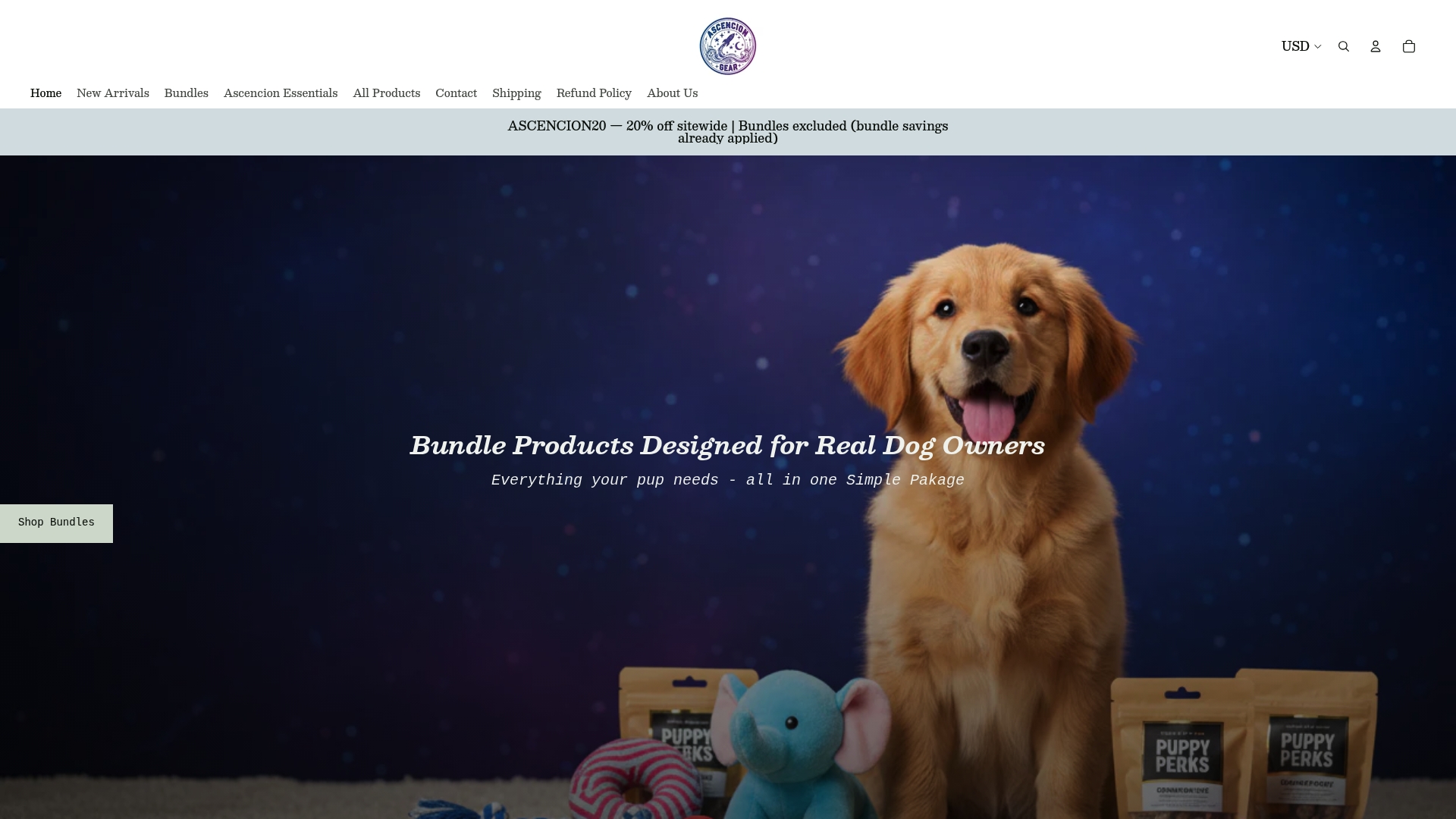
Ascenciongear carries the core items from this checklist in one place: from a plush washable crate pad that holds up through dozens of wash cycles, to a dog treats bundle with three flavor varieties for training and bonding. For play and mental stimulation, the interactive octopus puzzle set keeps dogs engaged without overwhelming them. Ascenciongear ships across the US and bundles products so new owners get more value without having to piece together a cart item by item.
FAQ
What should I buy before bringing a dog home?
The non-negotiables are food and water bowls, a crate, collar, leash, ID tag, dog food, poop bags, and basic training treats. Everything else can wait until you know your specific dog’s size and temperament.
How much of my dog’s diet should come from treats?
Treats should not exceed 10% of your dog’s total daily calorie intake. If you’re training heavily, reduce the main meal size to compensate.
Do dogs need flea prevention in winter?
Yes. Skipping parasite prevention in winter is a common mistake. Parasites can survive indoors and in mild temperatures, making year-round prevention the safe choice.
How long does it take a new dog to adjust to a home?
Most dogs need at least three days to decompress in a new environment with minimal stimulation, per ASPCA guidance. Full behavioral adjustment can take several weeks.
What grooming tools do I actually need as a new dog owner?
Start with a slicker brush or grooming gloves, nail clippers, and dog shampoo. A toothbrush and toothpaste are worth adding in the first month to build the habit before dental issues develop.