

Keeping up with dog care means more than feeding and walking. Veterinary guidelines shift, behavioral science advances, and what worked five years ago may not be the best approach today. The dog care tips 2026 owners need go beyond the basics. They cover updated vaccine schedules, modern training methods, dental hygiene, mental enrichment, and travel safety. This guide pulls from current research to give you a practical, prioritized list you can actually use, whether you have a new puppy or a senior dog who’s been with you for years.
Table of Contents
- Key takeaways
- 1. Follow the 2026 dog care checklist for vaccinations
- 2. Year-round parasite prevention is non-negotiable
- 3. Modern dog training tips for 2026
- 4. At-home dental care: the most skipped step in dog wellness
- 5. Enrichment and exercise in your dog care routines 2026
- 6. Safety, comfort, and the dog travel essentials checklist 2026
- 7. Prioritizing your dog wellness checklist 2026 by impact
- What I’ve learned after years of watching owners get this wrong
- Support your dog’s care routine with quality gear from Ascenciongear
- FAQ
Key takeaways
| Point | Details |
|---|---|
| Update your vaccine schedule | Core puppy vaccines should complete by 16 weeks, with adult boosters every 3 years. |
| Use reward-based training | Positive reinforcement reduces anxiety and builds obedience faster than correction-based methods. |
| Brush teeth daily | Daily brushing cuts plaque by up to 76%, but start with a slow desensitization process. |
| Prioritize mental enrichment | Puzzle feeders and scent work reduce destructive behavior as effectively as physical exercise. |
| Build consistent routines | Predictable daily schedules reduce anxiety, especially in newly adopted or rescue dogs. |
1. Follow the 2026 dog care checklist for vaccinations
Dog care tips 2026 start with getting the vaccine schedule right. Core puppy vaccines begin at 6 to 8 weeks and should be complete by 16 weeks. The core vaccines include Distemper, Adenovirus, Parvovirus, and Rabies. For adult dogs, boosters are given every 3 years, not annually as was once standard practice.
One vaccine worth discussing with your vet is Leptospirosis, now recommended as an urban core vaccine for dogs with outdoor exposure. Many owners skip it because they consider it non-core, but urban soil and puddles carry the bacteria. Ask your vet directly at your next visit.
Pro Tip: Keep a digital photo of your dog’s vaccine records on your phone. You will need them for boarding, grooming appointments, and dog parks.
2. Year-round parasite prevention is non-negotiable
Many owners drop parasite prevention in winter. This is a mistake. Fleas and ticks stay active year-round indoors, and ticks can transmit Lyme disease within just 24 to 48 hours of attachment. Parasite prevention should start at 8 weeks and continue monthly or on a 3-month protocol without seasonal breaks.
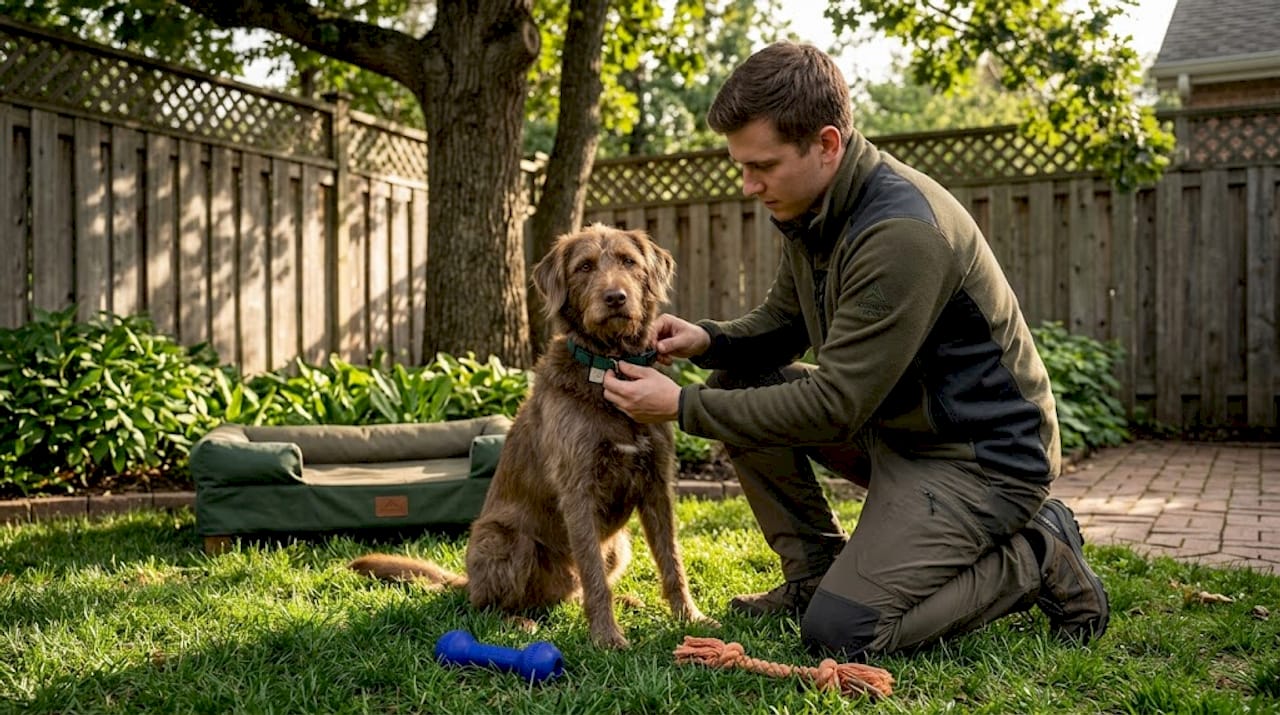
Annual fecal testing matters even when your dog is on prevention. Standard preventives miss infections like Giardia, which spreads through contaminated water and grass. Your vet can catch it on a routine fecal test. Most owners skip this step entirely, which is why Giardia often goes undiagnosed for months.
3. Modern dog training tips for 2026
The biggest shift in dog training over the last few years is the move away from dominance theory. Most dogs labeled aggressive are actually reactive, meaning their responses come from fear and anxiety rather than a desire to dominate. That distinction changes how you train.
Reward-based training is more effective than correction-based methods for improving obedience and reducing anxiety. The key is catching your dog doing the right thing, then rewarding with high-value treats immediately. Short sessions of 5 to 10 minutes, done twice daily, beat one long session every time.
Technology is also a real option now. Smart collars can track stress indicators and flag patterns in your dog’s behavior across the week. AI training apps offer customized session plans based on breed and age. These tools complement a good trainer. They do not replace one.
- Keep sessions under 10 minutes for best focus
- Use high-value rewards like small meat-based treats for new behaviors
- Train in low-distraction environments first, then add distractions gradually
- Address reactivity with desensitization and counter-conditioning, not punishment
Pro Tip: Training your visitors matters as much as training your dog. Teach guests the “Ignore the Dog” rule when they arrive. When visitors stop rewarding jumping with attention, the behavior fades fast. Calm visitor behavior is teachable with a “Place” command and consistent boundaries.
Using treat toys for training also helps reinforce positive associations and keeps engagement high during sessions.
4. At-home dental care: the most skipped step in dog wellness
Daily brushing reduces plaque by 76%, yet fewer than 2% of dog owners do it. Dental disease is one of the most common preventable conditions in dogs, and it connects to heart, kidney, and liver health over time. The good news is that most dogs can learn to tolerate brushing within a few weeks.
Here is a practical four-step introduction process:
- Week 1: Let your dog lick a small amount of dog-safe enzymatic toothpaste from your finger. Never use human toothpaste. It contains xylitol and fluoride, both toxic to dogs.
- Week 2: Rub your finger along the outside of the gums while offering the toothpaste as a reward.
- Week 3: Introduce a soft finger brush or a small dog toothbrush, using the same motion.
- Week 4: Brush for 30 to 60 seconds on the outer surfaces of the teeth.
Brushing right after calm exercise works best. Your dog’s jaw is relaxed, and they are more cooperative.
Pro Tip: Start brushing after a professional cleaning to get the most benefit. Dental chews maintain cleanliness but cannot remove existing tartar. A clean mouth is the best starting point.
The desensitization approach used here mirrors pediatric dental methods. Dogs that build a positive association early rarely resist brushing as adults. Products with the VOHC (Veterinary Oral Health Council) seal are the best alternatives when brushing is not possible.
5. Enrichment and exercise in your dog care routines 2026
Physical exercise and mental stimulation are not interchangeable. A tired dog is not the same as a fulfilled dog. Mental enrichment is especially important for high-energy breeds and significantly reduces destructive behavior at home.
| Activity Type | Benefit | Frequency |
|---|---|---|
| Puzzle feeders | Slows eating, builds focus | Daily |
| Scent work or sniff walks | Reduces stress, tires the brain | 3 to 5 times per week |
| Trick training | Builds confidence, strengthens bond | Daily, short sessions |
| Interactive toys | Engages prey instincts, reduces boredom | Daily |
| Off-leash play or fetch | Physical outlet, cardiovascular health | 4 to 7 times per week |
Rotating toys prevents boredom. A toy your dog has not seen in two weeks feels new again. Introducing new dog toys safely reduces the risk of possessive behavior and helps dogs with resource guarding tendencies.
- Sniff walks, where your dog leads and sniffs freely, are mentally exhausting in the best way
- Feeding from puzzle toys instead of bowls adds 10 to 15 minutes of mental work per meal
- Breed-specific enrichment matters: terriers love digging boxes, retrievers love carrying objects
6. Safety, comfort, and the dog travel essentials checklist 2026
Your dog’s physical environment affects behavior as much as training does. A dog sleeping on a cold, hard floor gets less restorative rest, which connects to irritability and anxiety. A supportive, machine-washable crate pad gives dogs a clean, consistent place to decompress.
For travel, your dog travel essentials checklist 2026 should include:
- Crash-tested car harness or secured travel crate
- Collapsible water bowl and portable water supply
- Copies of vaccine records (digital and paper)
- Prescription medications plus a few extra days of supply
- A familiar blanket or toy to reduce stress in new environments
- Updated ID tag and microchip registration with current contact info
Pro Tip: Check your dog’s microchip registration annually. Many owners register at adoption and never update the contact details after moving or changing phone numbers. The chip is useless if the data is wrong.
Home environment adjustments also matter. White noise machines reduce reactivity to street sounds. Baby gates create predictable safe zones. Trending dog accessories for 2026 include calming beds, smart feeders, and GPS-enabled collars worth considering for dogs with anxiety or wandering tendencies.
7. Prioritizing your dog wellness checklist 2026 by impact
Not every care task carries the same weight. The table below compares key practices by frequency and impact so you can allocate your time and budget wisely.
| Care Area | Frequency | Impact Level | Budget Consideration |
|---|---|---|---|
| Vaccination | Yearly checkup, boosters every 3 years | Critical | Non-negotiable cost |
| Parasite prevention | Monthly or quarterly | Critical | Affordable options available |
| Tooth brushing | Daily | High | Low cost with right tools |
| Mental enrichment | Daily | High | Mostly free or low cost |
| Professional dental cleaning | 1 to 2 times per year | High | Moderate to high cost |
| Physical exercise | Daily | High | Free |
| Vet wellness exam | Annually, twice yearly for seniors | Critical | Moderate cost |
The best dog care advice for owners on a tight budget: prioritize parasite prevention, daily brushing, and consistent routines first. These three changes cost the least and return the most. Professional cleanings and premium toys are meaningful upgrades, not the starting point.
Dogs thrive on consistency, and newly adopted or rescue dogs especially struggle without structure. Building predictable morning and evening routines reduces anxiety faster than any product.
What I’ve learned after years of watching owners get this wrong
I’ve seen owners spend hundreds on supplements and premium food while skipping daily walks and refusing to set consistent boundaries. The money rarely fixes the behavior. What actually works is boring. Short training sessions every day. The same feeding time every morning. A predictable walk route your dog has memorized.
The most underused tool in dog behavior management is not a smart collar or a new toy. It is scent work. Ten minutes of sniffing in the yard or a scatter feed in the grass does more for an anxious dog than an hour of fetch. I’ve watched dogs that were labeled “untrainable” calm down significantly within two weeks of adding structured sniff sessions to their routine.
The other thing most articles skip: training human inconsistency is at the root of most behavior problems. Your dog is not confused. The people in the house are sending different signals. Getting every family member on the same page about rules and commands is harder than any dog training technique, and it matters more.
Premium food alone does not create emotional stability in dogs. Firm boundaries and structured daily exercise do. That is not an opinion. That is what the research keeps confirming.
— Thomas
Support your dog’s care routine with quality gear from Ascenciongear
Putting a solid care routine in place is the hard part. Having the right gear makes it easier to stick with it.

Ascenciongear carries the tools that back up every section of this guide. For mental enrichment, the hide-and-seek octopus puzzle set gives dogs four engaging toys that reduce boredom and channel instincts. For chewers who also need dental stimulation, the squeaky crinkle chew toy is a durable, safe option dogs return to again and again. Explore the full collection at Ascenciongear to find bundles built around your dog’s size, age, and energy level.
FAQ
How often should I take my dog to the vet in 2026?
Healthy adult dogs need a wellness exam once a year. Senior dogs benefit from twice-yearly checkups to catch age-related conditions early.
What are the core dog vaccines my dog needs?
Core vaccines include Distemper, Adenovirus, Parvovirus, and Rabies. Puppies complete the series by 16 weeks, and adult dogs receive boosters every 3 years.
How do I start brushing my dog’s teeth if they refuse?
Start with a 2 to 4 week desensitization process. Let your dog lick enzymatic toothpaste from your finger first, then gradually introduce a soft brush over several sessions.
What counts as mental enrichment for dogs?
Puzzle feeders, scent work, trick training, and sniff walks all qualify. Even 10 minutes of structured sniffing per day reduces anxiety and destructive behavior in most dogs.
Do I need year-round flea and tick prevention?
Yes. Fleas and ticks remain active indoors year-round, and ticks can transmit disease within 24 to 48 hours of attachment. Monthly or quarterly prevention is recommended regardless of season or climate.