

Bringing a puppy home is exciting. It is also surprisingly easy to get wrong before day one even arrives. A puppy starter kit, also called a new puppy essentials pack, is a curated collection of supplies designed to cover your puppy’s health, safety, comfort, and training needs from the moment they walk through your door. New puppy owners often spend hours reading conflicting product lists, only to end up with too much of the wrong stuff and not enough of what actually matters. This guide cuts through the noise and tells you exactly what belongs in a solid starter kit and why each item earns its place.
Table of Contents
- Key takeaways
- What is a puppy starter kit and what it contains
- Training tools and behavioral aids in puppy kits
- Supplementary items for wellbeing and long-term comfort
- Common mistakes when building a puppy starter kit
- My honest take on building your first puppy kit
- Get your puppy started right with Ascenciongear
- FAQ
Key takeaways
| Point | Details |
|---|---|
| Crate sizing is critical | A correctly sized crate supports housetraining by limiting space where accidents can occur. |
| Training tools need to be consistent | Every person in your household should use the same clicker, treats, and commands for faster results. |
| Safety comes before comfort | Puppy-proofing your home and choosing size-appropriate toys prevents injuries and setbacks. |
| Wellbeing items matter early | Beds, grooming tools, and vet planning support long-term health starting in the first weeks. |
| Avoid common sizing mistakes | Wrong-sized crates and toys are among the most frequent errors new owners make. |
What is a puppy starter kit and what it contains
A puppy starter kit is a grouped set of supplies that addresses every core need a young dog has during the first weeks at home. Think of it as your foundation before you learn what your specific puppy needs. The standard industry term is a “new puppy essentials pack,” though most pet stores and bundle sellers use “starter kit” interchangeably.
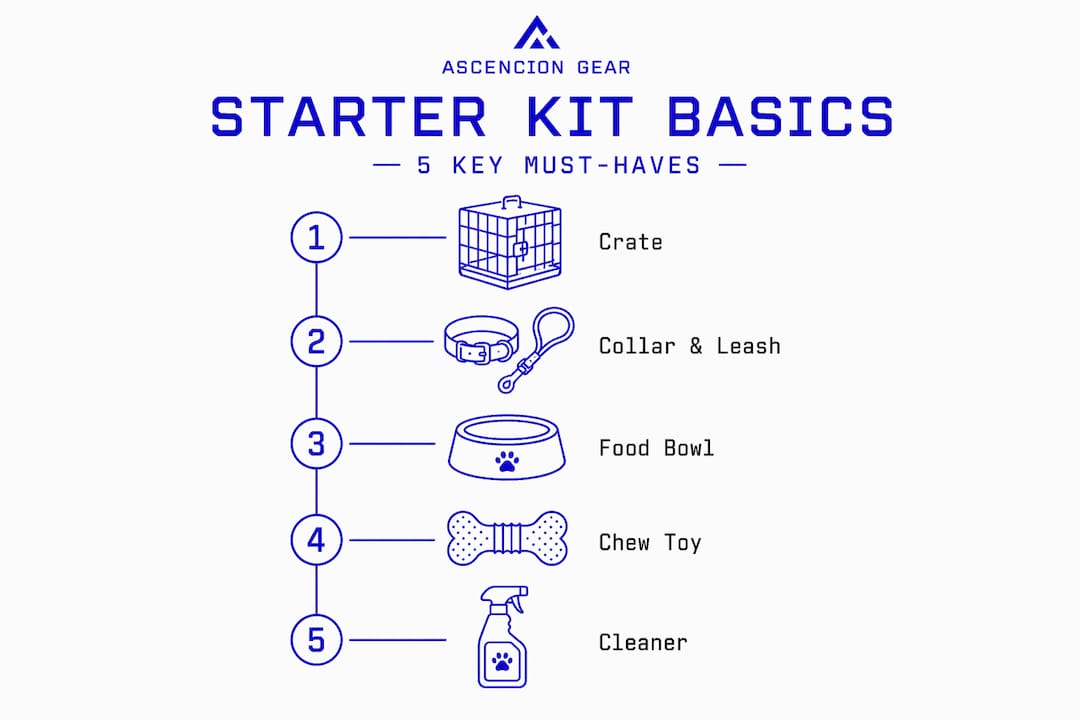
The items inside a well-built kit fall into clear categories. Here is what every solid kit covers:
- Crate. Correct crate sizing directly supports housetraining. The American Humane Society notes that a puppy should fit lying down comfortably but not have extra room to eliminate in corners. Buy a crate sized for your puppy now, not the adult dog they will become.
- Food and water bowls. Shallow, stable bowls work best for small puppies. Heavy ceramic or stainless steel options resist tipping and are easier to sanitize than plastic.
- Collar and ID tag. Identification items are a foundational safety measure. Your puppy’s collar should fit snugly with room for two fingers between the collar and neck. Include your name and phone number on the tag from day one.
- Safe chew toys. Puppies chew everything. Puppy-proofing your home and providing approved chew toys reduces hazards significantly. Avoid toys with small detachable parts, and always match toy size to your puppy’s breed.
- Leash. A four to six foot standard leash gives you control without restricting movement during early walks and training sessions.
Pro Tip: Choose a crate that comes with an adjustable divider. This lets you shrink the usable space while the puppy is small, then open it up as they grow, without buying a second crate.
For small breed owners, a kit like the 50-piece puppy essentials set from Ascenciongear covers the overlap between gear and hygiene items that most basic kits skip.
Training tools and behavioral aids in puppy kits
Getting your puppy’s behavior on track starts in week one, not month three. The training tools you include in your starter kit shape how quickly your puppy learns and how consistent that learning becomes.
Here is a step-by-step look at what to include and why each piece matters:
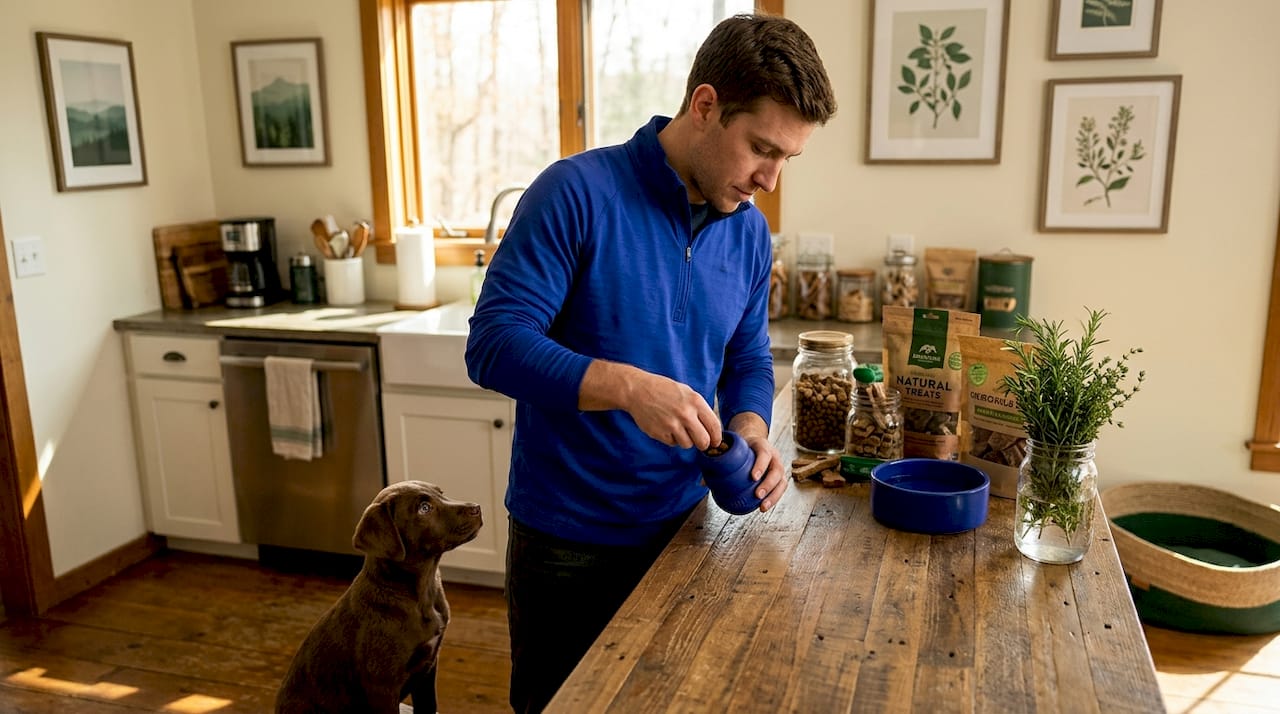
- Treats and a treat pouch. Treats are the primary currency of puppy training. Small, soft treats work best because they are easy to deliver quickly after a correct behavior. A treat pouch worn on your belt keeps rewards accessible so you never miss the training window.
- Clicker or verbal marker. Clickers paired with treat-based training are among the most effective early training tools. The click marks the exact moment your puppy does something right, which makes the feedback faster and clearer than verbal praise alone.
- Puppy training pads. Housetraining requires patience and consistent routines. Placing training pads in a designated spot teaches your puppy where it is acceptable to go while you work toward outdoor bathroom habits. Larger pads reduce misses significantly.
- Enzymatic cleaner. Accidents will happen. Standard cleaners mask odors to your nose but not your puppy’s. An enzymatic cleaner breaks down the organic compounds that draw puppies back to the same spot repeatedly.
- Short training lead. A lightweight training lead gives your puppy the feeling of freedom indoors while still allowing gentle redirection without grabbing.
The consistency piece is frequently underestimated. Standardizing training tools across every member of your household makes a measurable difference. If one person uses a clicker and another uses a hand signal, your puppy has to work twice as hard to figure out what earns a reward. Agree on the method before the puppy arrives.
Pro Tip: Keep a dedicated training kit in a small bag or box. When everyone in the house can grab the same tools with no searching, training sessions happen more often and more consistently.
For more on using rewards effectively, the guide on treat toys for training at Ascenciongear breaks down how to pair play with reward-based learning.
Supplementary items for wellbeing and long-term comfort
Once the core gear is covered, a good starter kit also addresses the items that support your puppy’s wellbeing over weeks and months, not just the first night.
- Dog bed or crate pad. Puppies sleep a lot, up to 18 hours a day in their first months. A soft, machine-washable crate pad gives them a consistent rest space that smells familiar and feels safe. Comfort inside the crate also reduces nighttime crying and separation anxiety.
- Basic grooming supplies. Start grooming early, even before it is strictly necessary. A soft slicker brush, puppy nail clippers, and puppy-safe toothpaste introduced in week one make lifelong grooming far easier. Puppies who are handled regularly during this period accept grooming as normal.
- Puppy-specific nutrition. Puppies leaving their mother at 7 to 8 weeks require food labeled for growth or all life stages by AAFCO. Do not feed adult dog food to a puppy. The caloric density and nutrient ratios are different in ways that affect bone and brain development.
- Vet visit planning. Your starter kit should include a printed list of questions for your first vet appointment. Vaccine schedules, deworming timelines, and breed-specific health concerns are all worth discussing before problems arise.
- Interactive toys. Toys are not a luxury. Mental stimulation is directly tied to behavioral health in young dogs. The first months of a puppy’s life are a critical window where well-chosen items shape behavior long-term. Puzzle toys, soft squeaky toys, and rotating options keep puppies engaged and reduce destructive behavior.
Common mistakes when building a puppy starter kit
Even well-prepared owners make predictable errors when putting together their puppy supplies checklist. Knowing what to avoid saves money, time, and real setbacks in training.
| Mistake | Why it matters | What to do instead |
|---|---|---|
| Oversized crate | Extra space allows puppies to sleep on one side and eliminate on the other, breaking the housetraining connection | Use a divider or buy a correctly sized crate for the puppy’s current weight |
| Wrong-sized chew toys | Ill-fitted toys pose choking hazards and frustrate training progress | Match toy size to breed; discard any toy a puppy can fit entirely in their mouth |
| Inconsistent training tools | Different rewards or commands from different family members slow learning significantly | Standardize one treat, one clicker, and one command set before puppy arrives |
| Skipping puppy-proofing | Puppies chew wires, swallow small objects, and access toxic plants easily | Puppy-proofing the home is not optional; do it room by room before arrival |
| Buying for the adult dog | Gear sized for a 60-pound adult does not work for an 8-week-old puppy | Buy for current size and plan to upgrade; do not buy ahead |
One point that does not get enough attention: the focus of a starter kit should be preventing repeated accidents and unsafe behaviors, not accumulating as many products as possible. More gear is not better gear. A focused, correctly sized, safety-first kit outperforms a packed cart of oversized or poorly matched items every time.
My honest take on building your first puppy kit
I have seen new owners walk in with two bags of toys and no enzymatic cleaner. I have also seen people spend three hours on a gear spreadsheet and still forget a collar. Here is what I have actually learned from watching this go wrong repeatedly.
The single biggest mistake is buying for the puppy you imagine instead of the puppy you have. An 8-week-old Labrador and an 8-week-old Chihuahua need completely different toys, bowls, and crates. No universal kit covers both well, which is why sizing and supervision matter more than brand names or price points.
What experienced owners overlook most often is the grooming piece. Everyone remembers toys. Almost nobody starts a toothbrushing habit in week two. By week sixteen, the window for easy grooming acceptance is mostly closed. Start early, even if it feels unnecessary.
My take on the balance between essentials and extras: buy the short list first and wait two weeks before adding anything. You will know your puppy’s chewing style, energy level, and sleep preferences by then. That knowledge makes every additional purchase more accurate and far less wasteful.
The puppy kit is not about being ready for everything. It is about having the right things for the specific animal living in your specific home.
— Thomas
Get your puppy started right with Ascenciongear
Ascenciongear carries curated puppy starter bundles built around the same principles covered in this guide: correct sizing, safety-first toy selection, and training-ready accessories. Whether you need a cozy crate pad for resting, a set of soft interactive squeaky toys for teething, or a three-flavor treat bundle for reward-based training, Ascenciongear ships everything across the US. The bundle-first approach means you get matched items at better value than buying each piece separately, and every product is selected with new puppy owners in mind.
FAQ
What is a puppy starter kit?
A puppy starter kit is a grouped collection of supplies covering a new dog’s core needs, including a crate, collar, food bowls, chew toys, training aids, and cleanup tools. It gives new owners a practical starting point without the guesswork.
How many items should a puppy starter kit include?
A solid starter kit covers five to ten core items focused on safety, feeding, training, and comfort. Anything beyond that should be added based on your specific puppy’s needs after the first week or two at home.
What size crate should go in a puppy starter kit?
The crate should be large enough for your puppy to stand, turn around, and lie down comfortably, but not so large that they can use one corner as a bathroom. A correctly sized crate is one of the most important housetraining tools you own.
Are puppy starter kits worth buying as bundles?
Yes, when the bundle is built around your puppy’s size and stage. Pre-made kits save time and usually cost less than buying items individually. Verify that each item in the bundle is sized for puppies, not adult dogs.
What food should I include in a new puppy essentials pack?
Choose a food labeled for “growth” or “all life stages” with an AAFCO statement on the package. Puppy-specific nutrition supports the bone and brain development that adult formulas are not designed to provide.
Recommended
- Starter Puppy Kit - Training Pads, Bowl, Toys & Treats | Ascencion Gear
- New Puppy Starter Kit - Cozy Bed & 8 Squeaky Toys | Ascencion Gear
- 50-Piece Puppy Starter Kit - Complete Dog Essentials for Small Dogs Blue – Ascencion Gear
- New Dog Starter Kit | Bed, Crinkle Toy & 12-Piece Toy Set | Ascencion Gear